
The choice is not between today's welfare state and yesterday's poorhouse. It is whether government must remain the default manager of compassion — or can become its limited guarantor, referee, and reinsurer.
Read the story →Americans gave $617 billion to charity in 2025 — a record. It is also nowhere close to replacing the American safety net. Both statements matter. Too much of the debate permits only one.
Read the story →The New Deal did not invent government aid. It transformed scattered relief into a permanent federal compact — and changed what Americans believed they were owed, what they were required to pay, and who would answer when the economy collapsed.
Read the story →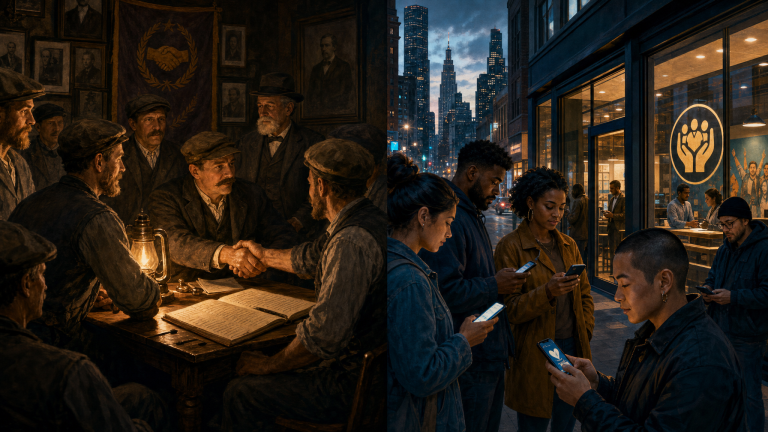
Long before Washington became the nation's insurer of last resort, Americans lived inside a dense ecology of family obligation, religious charity, mutual aid, employer benefits, private philanthropy, and local public relief. That world deserves recovery — but not mythology.
Read the story →
Nobel Prize-winning economists and new demographic research show AI job doom predictions ignore two massive blind spots — and the data points to the exact opposite crisis.
Read the story →
The minerals powering the clean energy transition are running out on land. But 21 billion tonnes of cobalt, nickel, and manganese sit on the Pacific Ocean floor, 18,000 feet down. Markets have noticed. Twenty-two contractors from twelve countries are already racing to the bottom. Here is what is actually happening.
Read the story →
Argentina created a legal category for AI corporations. An autonomous entity — no human required — that can own assets, hire employees, and sue in court. Yuval Noah Harari called it dangerous. History says otherwise. Here is what AI legal personhood actually means — and the enormous consumer surplus it could unlock.
Read the story →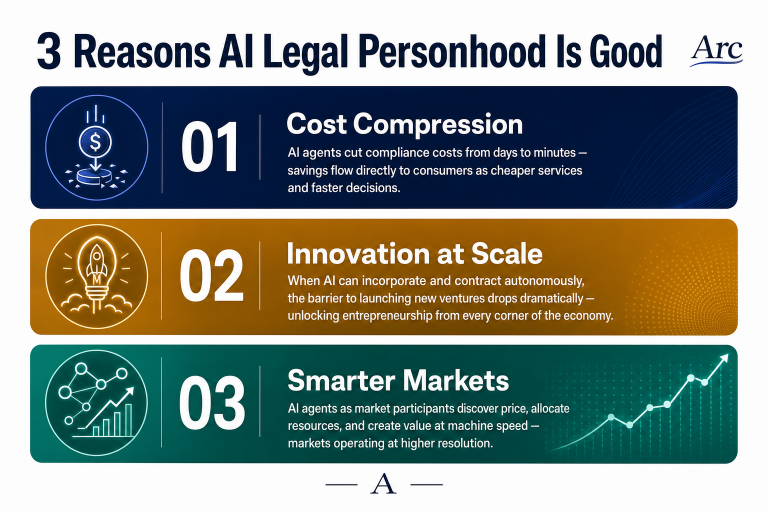
Your next landlord may be an AI — legally. The LLC is already registered. The bank account is open. The lease is waiting. Here is why the legal framework for AI landlords already exists, why markets are driving it faster than law can respond, and what it means for every business that transacts with counterparties.
Read the story →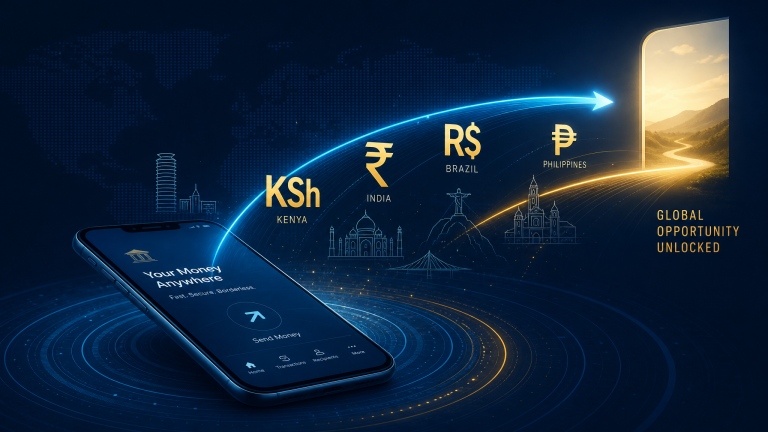
In 10 years, 1.1 billion people gained access to the financial system — not through government programs, but through private mobile money platforms like M-Pesa, UPI, and Nubank. The mechanism was the profit motive, applied at mobile-phone scale.
Read the story →
In 1990, more than one in three people on Earth — 36 percent of the global population — lived in extreme poverty. By 2023, that figure had fallen below 9 percent. In raw numbers, the share of humanity struggling to...
Read the story →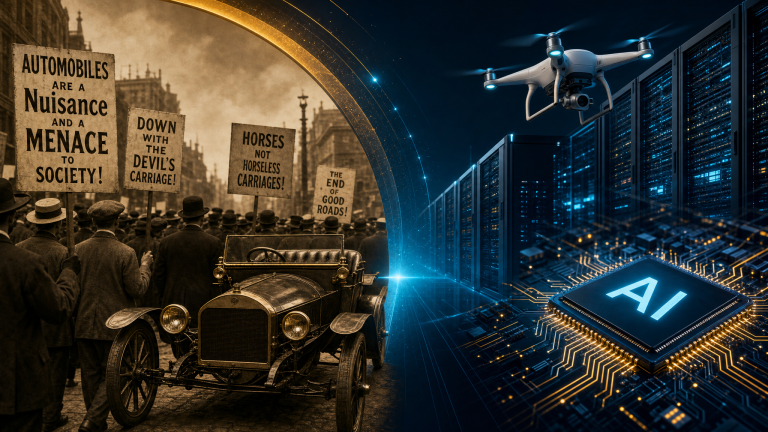
From red flag laws for cars to banning data centers in Missouri, the pattern is identical across two centuries: the public fears new technology, demands restrictions, and is later proven wrong. History has a name for the people who led those restrictions. It is not flattering.
Read the story →
Sometime in the late 1980s, a woman named Trung Thi Lan left her village in the Red River Delta and took a job at a garment factory in Hanoi. The factory was new — part of Vietnam’s Doi Moi economic...
Read the story →
The ocean generates $2.2 trillion a year and supports 600 million livelihoods. Less than 25% of the ocean floor has been mapped. Every number points the same direction: the surface has barely been scratched.
Read the story →
The ocean's wild fisheries stopped growing in the 1990s. Every pessimist said the world would go hungry. Instead, aquaculture quietly became the fastest-growing food sector in human history — and it's just getting started.
Read the story →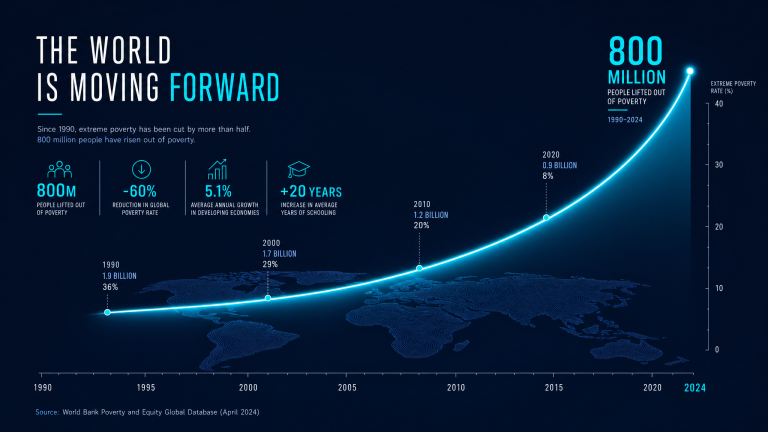
Free markets lifted over a billion people out of extreme poverty. Not aid programs. Not the UN. The data on China, India, and the East Asian Tigers is unambiguous.
Read the story →
Three laws. One pattern. The mechanism that drives every major technology cost collapse in history is competition — not genius, not government, not luck.
Read the story →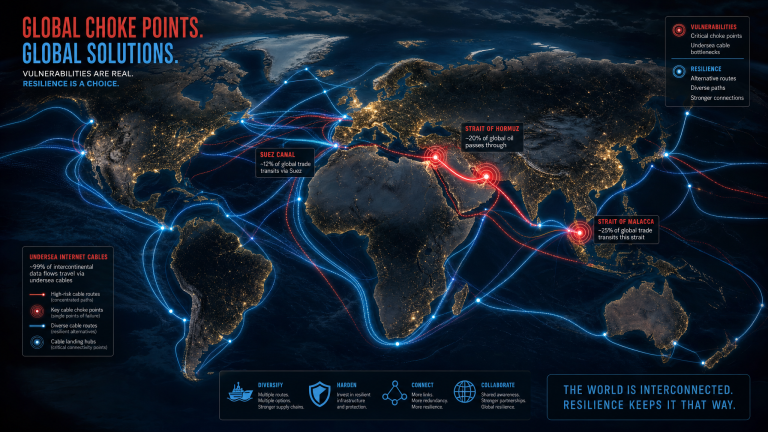
The Strait of Hormuz. Undersea internet cables. Chinese rare earth processing. Every system civilization depends on passes through a bottleneck. The companies solving for resilience are building the next great fortunes.
Read the story →