

In 1900, there were almost no democracies on earth. A handful of partial exceptions existed — fragile parliaments, constrained monarchies, limited franchises. But genuine self-governance, by any reasonable modern definition, covered less than 1% of the world’s population. The default...
Read the story →
In 1969, the Cuyahoga River in Cleveland, Ohio, caught fire. Oil slicks and industrial waste on the river surface ignited — not for the first time; the river had caught fire at least 13 times before, dating back to 1868....
Read the story →
3× Increase in the share of world population living under some form of rule of law since 1900 — from under 20% to over 60% Source: Our World in Data / V-Dem Project / Freedom House In 1900, fewer than...
Read the story →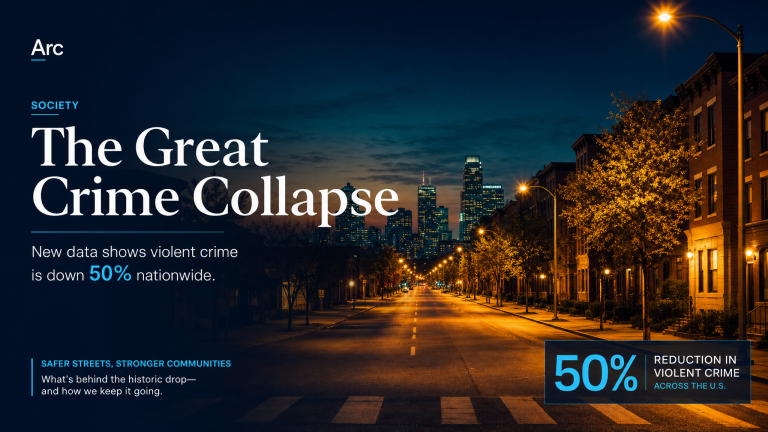
-50% U.S. violent crime rate decline from its 1991 peak to 2022 — from 758 to roughly 380 per 100,000 people Source: FBI Uniform Crime Reports / Bureau of Justice Statistics The American violent crime rate peaked in 1991 at...
Read the story →
>90% Reduction in death rates from natural disasters over the last century, despite population more than tripling Source: Our World in Data / EM-DAT Emergency Events Database In the 1920s, natural disasters—floods, storms, droughts, earthquakes—killed well over a million people...
Read the story →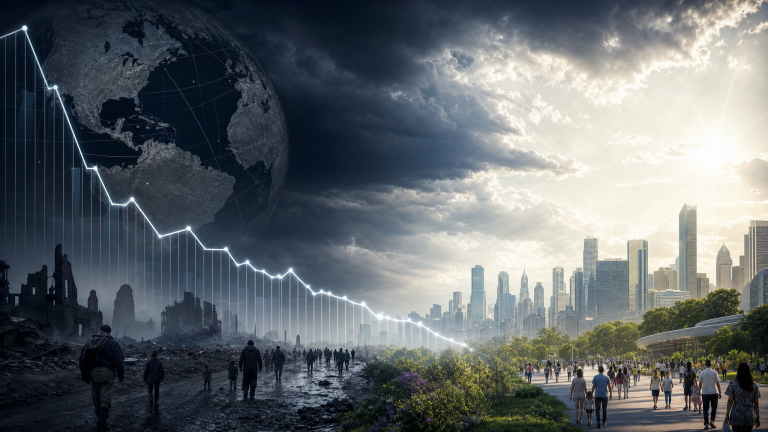
Every decade, the numbers improve. War deaths, homicide rates, genocide deaths, violent crime — all trending down over the long arc. The feeling that the world is getting more dangerous is not supported by a single major dataset.
Read the story →
Starlink transformed the Ukraine battlefield in 72 hours. GPS guides munitions 100x more precisely than unguided weapons. Space is no longer about prestige — it is the infrastructure layer of modern warfare.
Read the story →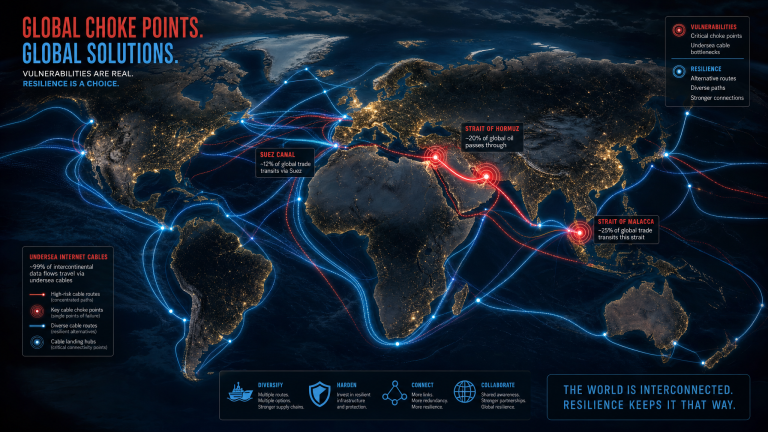
The Strait of Hormuz. Undersea internet cables. Chinese rare earth processing. Every system civilization depends on passes through a bottleneck. The companies solving for resilience are building the next great fortunes.
Read the story →