
The choice is not between today's welfare state and yesterday's poorhouse. It is whether government must remain the default manager of compassion — or can become its limited guarantor, referee, and reinsurer.
Read the story →Americans gave $617 billion to charity in 2025 — a record. It is also nowhere close to replacing the American safety net. Both statements matter. Too much of the debate permits only one.
Read the story →The New Deal did not invent government aid. It transformed scattered relief into a permanent federal compact — and changed what Americans believed they were owed, what they were required to pay, and who would answer when the economy collapsed.
Read the story →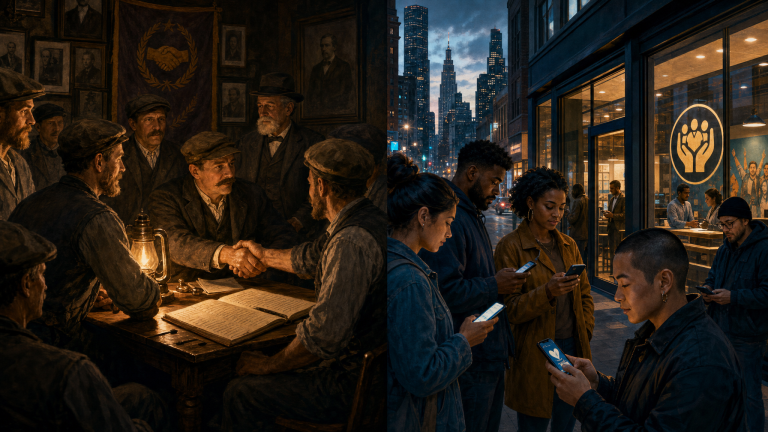
Long before Washington became the nation's insurer of last resort, Americans lived inside a dense ecology of family obligation, religious charity, mutual aid, employer benefits, private philanthropy, and local public relief. That world deserves recovery — but not mythology.
Read the story →
Before the internet, quality education required proximity to elite institutions. Geography was destiny. Then came the market. Coursera, Udemy, Khan Academy, and MIT OpenCourseWare obliterated that barrier — 148 million learners, 150 million Khan Academy users, and 350 million MIT visits later, the evidence is in. A Harvard-quality education now costs $0. The online learning revolution is the most under-celebrated shift of the 21st century.
Read the story →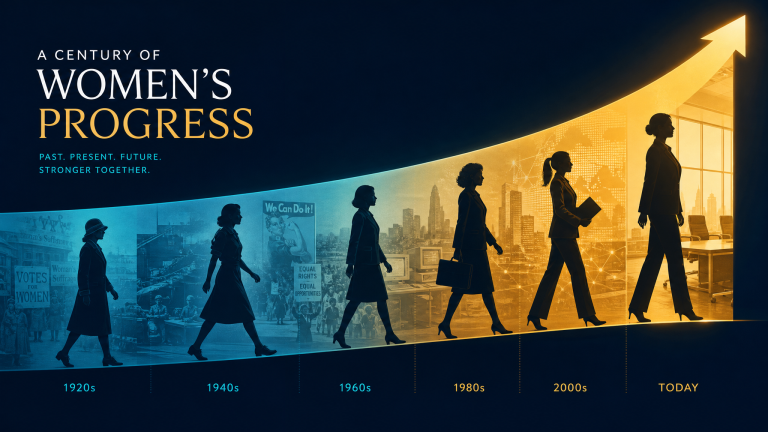
In 1920, half of humanity was formally barred from voting in the world’s leading democracy. In most countries, women could not own property in their own names, enter professional schools, sign contracts, or retain their wages after marriage. The baseline...
Read the story →
In 1990, more than one in three people on Earth — 36 percent of the global population — lived in extreme poverty. By 2023, that figure had fallen below 9 percent. In raw numbers, the share of humanity struggling to...
Read the story →
In 1900, there were almost no democracies on earth. A handful of partial exceptions existed — fragile parliaments, constrained monarchies, limited franchises. But genuine self-governance, by any reasonable modern definition, covered less than 1% of the world’s population. The default...
Read the story →
By almost every objective measure, the current generation in wealthy countries is the best-off in human history. Life expectancy in the United States is nearly 77 years — up from 47 in 1900. Violent crime is at 50-year lows. Extreme...
Read the story →
In 1900, roughly 9,000 scientific papers were published globally. The number is not a typo. The entire world’s organized scientific output for a year — biology, chemistry, physics, medicine, mathematics, geology, astronomy — fit in a stack of journals small...
Read the story →
In 1969, the Cuyahoga River in Cleveland, Ohio, caught fire. Oil slicks and industrial waste on the river surface ignited — not for the first time; the river had caught fire at least 13 times before, dating back to 1868....
Read the story →
The factory is in Denmark. It looks like a brewery — because it essentially is one. Inside stainless steel fermentation tanks, microorganisms are producing proteins that are chemically identical to those found in cow’s milk. No cows required. No pasture....
Read the story →
In February 2023, Australia became the first country in the world to authorize psychiatrists to prescribe MDMA for post-traumatic stress disorder and psilocybin for treatment-resistant depression. The announcement was quiet by global news standards — a regulatory update from the...
Read the story →
>90% Reduction in death rates from natural disasters over the last century, despite population more than tripling Source: Our World in Data / EM-DAT Emergency Events Database In the 1920s, natural disasters—floods, storms, droughts, earthquakes—killed well over a million people...
Read the story →
3× Increase in global cereal yield per hectare since 1961 — same land, three times more food Source: FAO / Our World in Data, 2022 In 1961, the world’s farmers harvested roughly 1.4 metric tons of cereal grain per hectare...
Read the story →
96% Less land required to produce precision-fermented dairy protein vs. conventional cow’s milk Source: Frontiers in Sustainable Food Systems, 2026 Inside an industrial building in the Netherlands, stainless steel bioreactors produce proteins that are chemically identical to those in cow’s...
Read the story →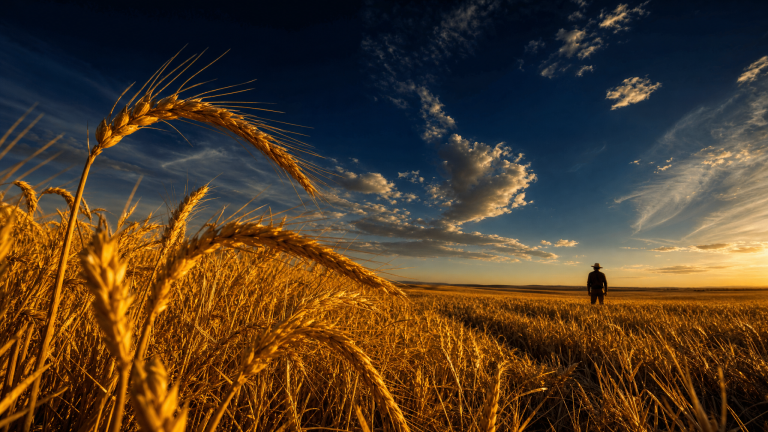
1 Billion Estimated number of people saved from starvation by Norman Borlaug’s wheat breeding work Source: Nobel Committee, 1970; Penn State University In 1944, a 30-year-old plant pathologist named Norman Borlaug arrived in Mexico with a simple assignment: help farmers...
Read the story →
Why does the arc of human progress always rise? Not because of economic theory. Because of a rule every grandmother has always known: do what is most important for you and your family, right now.
Read the story →
Every decade, the numbers improve. War deaths, homicide rates, genocide deaths, violent crime — all trending down over the long arc. The feeling that the world is getting more dangerous is not supported by a single major dataset.
Read the story →
The global literacy rate has inverted in 200 years — from 12% to 87%. It is one of the most profound expansions of human capability in history. And it is still accelerating.
Read the story →