

In February 2023, Australia became the first country in the world to authorize psychiatrists to prescribe MDMA for post-traumatic stress disorder and psilocybin for treatment-resistant depression. The announcement was quiet by global news standards — a regulatory update from the Therapeutic Goods Administration, effective from July 2023. But inside the psychiatric and neuroscience communities, it landed like a verdict: after fifty years in which psychedelic research was effectively frozen by drug prohibition policy, the clinical evidence had finally become undeniable.
The numbers that drove Australia’s decision are worth sitting with. In the Phase 3 clinical trials of MDMA-assisted therapy conducted by the Multidisciplinary Association for Psychedelic Studies (MAPS), 67 percent of participants no longer met diagnostic criteria for PTSD two months after completing treatment. The comparison: roughly 32 percent response rate with current best-available treatments — a combination of trauma-focused psychotherapy and medication that has remained essentially unchanged for decades. MDMA-assisted therapy didn’t incrementally improve on the standard of care. It roughly doubled the remission rate.
For psilocybin, a 2021 study at Johns Hopkins University followed participants with treatment-resistant depression — patients who had failed two or more courses of antidepressant medication (the scale of unmet need documented in the loneliness data explains why this matters) — for twelve months after receiving two sessions of psilocybin-assisted therapy. At the one-year mark, 54 percent remained in remission. Current antidepressants help approximately 50 percent of patients in the short term; long-term remission rates in treatment-resistant populations are far lower.
The Fifty-Year Gap
Understanding why these results feel surprising requires understanding what happened to psychedelic research in the 1970s. The field was not abandoned because the science failed. It was shut down because of politics. LSD and psilocybin were classified as Schedule I controlled substances in the United States in 1970, as part of the Nixon administration’s Controlled Substances Act. Schedule I designation — shared with heroin, and denied to cocaine and methamphetamine — meant no accepted medical use, no research pathways, no prescription. MDMA was added in 1985.
“We lost fifty years. The compounds were sitting there. The mechanisms were partially understood. We just weren’t allowed to study them.” — Roland Griffiths, founding director, Center for Psychedelic and Consciousness Research, Johns Hopkins University
The research that resumed when the political window began to open — tentatively, in the mid-2000s — was picking up threads from 1960s investigations that had been abruptly cut off. The neuroscience had advanced enormously in the intervening decades; the compounds had not. What changed was the regulatory and political permission structure, not the underlying science.
How These Compounds Work — and Why That Matters
The mechanism of action for psychedelic-assisted therapy is meaningfully different from conventional psychiatric pharmacology. Selective serotonin reuptake inhibitors — SSRIs, the dominant class of antidepressants — work by modulating neurotransmitter availability on an ongoing basis. Patients typically take them daily for months or years. The therapeutic effect depends on continuous dosing.
Psilocybin and MDMA appear to work differently: they seem to catalyze a period of neurological plasticity — a window during which the brain is more amenable to revising entrenched emotional and behavioral patterns — when combined with structured psychotherapy. The drug is not the treatment; the drug creates a window in which the therapy can go deeper than it typically can. This is why the clinical protocol for psilocybin involves one or two sessions rather than daily dosing, and why the effects appear to persist for months or years after the sessions end.
The neuroscience of this process is still being mapped, but the leading hypothesis involves psilocybin’s effect on the default mode network — the brain circuitry associated with self-referential rumination, which is overactive in depression and PTSD. Psilocybin appears to temporarily disrupt the default mode network’s habitual patterns, creating space for new associations to form. The therapeutic container — the preparation sessions, the guided experience, the integration work afterward — determines what fills that space.
The Regulatory Wave
Australia’s 2023 legalization was the first national-level approval, but the movement has a wider front. Oregon voters approved Measure 109 in 2020, establishing a state-licensed psilocybin services program; Oregon Psilocybin Services began licensing facilitators and service centers in 2023. Colorado voters passed Proposition 122 in November 2022, legalizing supervised psilocybin use and decriminalizing several other psychedelics. The UK’s Medical Research Council and the Canadian government have both funded trials and signaled regulatory receptivity.
The FDA granted Breakthrough Therapy designation to psilocybin for major depressive disorder in 2018 and for treatment-resistant depression in 2018 and 2019 — a designation that accelerates the review process and signals the agency’s view that the therapy addresses a serious unmet need. MDMA received the same designation for PTSD in 2017. These designations don’t guarantee approval, but they change the regulatory timeline and the nature of the dialogue between developers and the agency.
The Barriers That Remain Real
The FDA’s decision on MDMA, expected in 2024, did not result in approval at the time of writing — the agency requested additional data from MAPS on certain trial design questions. This is a reminder that the regulatory road is not linear. The clinical evidence for psychedelic-assisted therapy is strong; the regulatory process is still working through questions about protocol standardization, therapist training and credentialing, and the scalability of a model that requires hours of supervised therapeutic contact per patient.
That last point is a genuine constraint. The current clinical model for psilocybin therapy involves extensive preparation sessions, an eight-hour guided experience with two trained therapists present, and follow-up integration sessions. The therapist hours required per patient are substantial — which limits scalability and creates cost barriers. Researchers are actively working on models that could reduce the therapist ratio while maintaining safety, but this remains an open design problem.
What is not open is the underlying question of whether these compounds have therapeutic value. Fifty years of prohibition answered nothing about the science; it only prevented the science from being done. The science has now been done, by well-powered trials at credible institutions, with results that would be celebrated in any other therapeutic area. Psychiatric drug development essentially stalled between 1990 and 2015 — the major antidepressant and antipsychotic classes were discovered decades ago, with nothing transformatively new since. The psychedelic pipeline is the first genuinely new mechanism in psychiatric pharmacology in a generation. For 280 million people living with depression, and the tens of millions with PTSD for whom current treatments don’t work, that is not a small thing.
The How Together We Are dimension of the Arc Index measures not just formal social structures but the quality of inner life that makes genuine connection possible. Depression and PTSD fracture both: they isolate, they impair empathy, they damage the relationships through which people find meaning. Effective treatment for these conditions is not merely a health outcome — it is a social one. The psychedelic medicine revival is, in this sense, a story about the capacity for human connection expanding. What was locked away for fifty years is now coming back.
The same technology reshaping mental health treatment is transforming medical diagnosis broadly. AI diagnostic tools are matching specialist performance in settings where specialists don’t exist — a parallel arc of medical access expanding worldwide.
-
How to Change Your Mind by Michael Pollan
Pollan’s landmark exploration of psychedelic science — the book that brought mainstream credibility to the psilocybin research renaissance. The best starting point for general readers. -
The Psychedelic Explorer’s Guide by James Fadiman
The practical and scientific guide to psychedelic therapy from the researcher who helped revive the field. Essential background on the clinical protocols now entering mainstream medicine.
📚 Recommended Reading
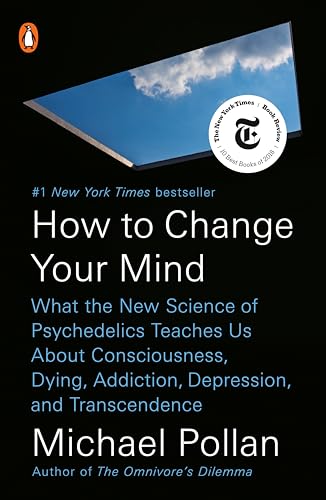
A recommended book that goes deeper on this topic.
View on Amazon →Bold Arc earns a small commission on purchases at no extra cost to you.