
This article contains affiliate links. Bold Arc may earn a commission at no cost to you.
There is a peculiar kind of political theater playing out in statehouses and city councils across America. Politicians stand at podiums, invoke the housing affordability crisis, and vow to act. Then they go back to their offices and leave in place the very regulations that made housing unaffordable in the first place.
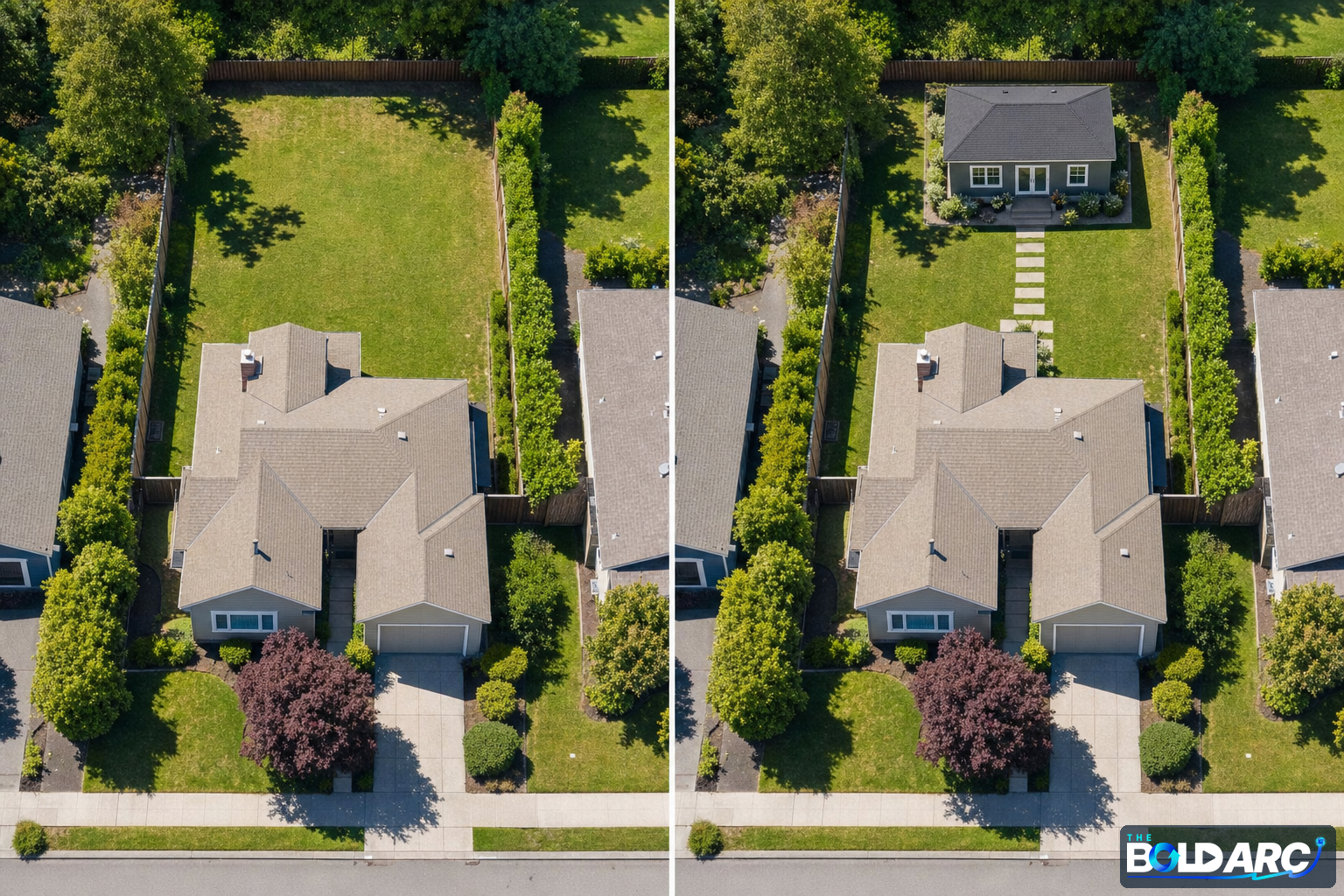
The subject is ADUs — Accessory Dwelling Units. Backyard cottages. In-law suites. Garage conversions. Carriage houses. The names vary. The idea is the same: let a homeowner build a second livable unit on land they already own.
It costs no taxpayer money. It requires no new infrastructure corridors. It does not displace a single existing resident. It unlocks a hidden inventory of housing supply that has been sitting dormant, blocked not by the market, but by government.
America needs 3.7 million housing units right now. ADUs will not solve the whole crisis. But in the states that have gotten out of the way, they have become a significant, scalable, and surprisingly fast piece of the answer. California — the first state to systematically remove ADU barriers — went from fewer than 800 ADU permits issued in 2014 to more than 30,000 in 2024. Last year, more than one in four new homes permitted in California was an ADU.
That is not a rounding error. That is a policy outcome.
Which makes what is happening in 30 other states all the more inexcusable.
The Right That Was Taken Away
Before we talk about what needs to change, it is worth understanding what was lost — and when, and why.
In the 1930s and 1940s, building a small additional structure on your family's land was not a policy debate. It was simply what Americans did. A young couple married and could not yet afford their own home — so they built two rooms in the backyard of the wife's parents' lot. They lived essentially rent-free while they saved. A few years later, they had enough to build or buy their own place, often on land a parent helped provide. The young family had their footing. The older generation had nearby help as they aged. No subsidy program. No government assistance. No bank required. A family used its land and its labor to solve its own housing problem.
This is not nostalgia. It is how generational wealth was built in working-class America for generations. It is why neighborhoods had variety — a main house and a smaller structure, a basement apartment, a garage with a room above it. The land was used fully, as the family needed.
 Get the book →
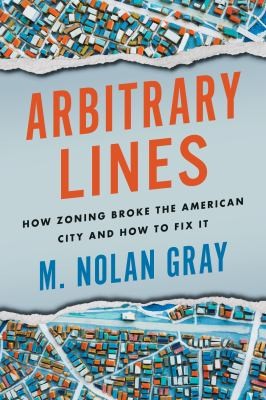
Then came the postwar suburban expansion, and with it, the systematic imposition of single-family-only zoning across American municipalities. Inspired by Euclidean zoning codes spreading since the Supreme Court's 1926 ruling in Village of Euclid v. Ambler Realty, local governments throughout the 1940s, 1950s, and 1960s codified a new standard: one lot, one house, nothing else. The garage was for cars. The backyard was for grass. Any second structure — the kind of modest, practical unit that families had built for a century — was reclassified. Illegal. City planner M. Nolan Gray documents how this transformation reshaped America city by city in Arbitrary Lines: How Zoning Broke the American City and How to Fix It — essential reading for anyone who wants to understand how we got here.
This was not a natural market outcome. It was a regulatory choice. A government decision to protect the aesthetic uniformity of new suburbs and, not incidentally, the property values of those already there. The families who had not yet gotten in — the younger generation who needed a foothold — were priced out by design.
The generational wealth-building ladder that ordinary Americans had used for more than a century was quietly pulled up by zoning law. And it has stayed up for nearly eight decades.
That is the property rights story that almost never gets told in housing policy debates. This is not about government failing to build enough affordable housing. It is about government outlawing the way Americans had always housed themselves. An ADU is not a new progressive idea. It is the restoration of a right.
The 30 states that still block ADUs are not simply failing to act. They are actively preserving a theft.
The Hidden Dividend: Built-In Child Care
There is a second cost buried inside the zoning story that almost nobody connects to it.
When the grandparents lived in the main house and their adult children lived in the ADU behind it, something else came with the arrangement: child care. The grandchildren were watched by the grandparents. Not as a formal arrangement with contracts and invoices, but as the natural rhythm of a family sharing a piece of land. It was how American families had always operated. The young parents went to work. The grandparents were fifty feet away. The children were loved and safe.
That system did not just disappear because of changing family preferences. It was dismantled by the same zoning codes that outlawed the ADU. When the law required one house per lot, it did not only eliminate affordable housing. It eliminated the proximity that made free, family-based child care possible. The grandparents who might have lived in the backyard now lived across town, or in another state, or in a nursing facility they could not afford.
What replaced them? The child care industry. A $70 billion market that now costs the average American family between $10,000 and $20,000 per year — more than in-state college tuition in many states. Young families today face a brutal arithmetic: housing costs that require two incomes, and child care costs that consume most of what the second income earns. For many families, the math does not work. They delay children. They leave the workforce. They move away from opportunity to find cheaper care.
The government created this double bind. First it made density illegal, eliminating the intergenerational proximity that provided free family care. Then it layered licensing, staffing ratio, and facility mandates onto the commercial child care industry that filled the void — mandates that drive costs so high that the industry simultaneously charges too much for families and pays too little to retain workers. The crisis was manufactured. It was not inevitable.
The Mechanism: Why ADUs Work
The economics of ADUs are straightforward. Because the land already exists and is already served by roads, utilities, and infrastructure, the marginal cost of adding a unit is dramatically lower than building in a new subdivision. Garage and room conversions cost 30 to 50 percent less than new detached construction. ADU condominiums in Seattle sold for an average of 53 percent less than comparable new detached homes.
The rental savings are real too. In the San Francisco Bay Area — one of the most expensive rental markets on earth — the median ADU rent runs about $2,200 per month against a broader market rate of $2,624. That is a 16 percent discount, created not by a subsidy program, but by adding supply.
And critically: ADU housing is not concentrated in one demographic. Only 8 percent of California ADUs are short-term vacation rentals. Eighteen percent house family members rent-free — grandparents, adult children, caregivers. The majority are long-term rentals. These are real homes, housing real people, created by real market activity.
ADUs are also part of a larger national shift in housing supply reform that has been building since 2016. They share the affordability mission with tiny home villages and factory-built manufactured housing — three distinct mechanisms, one arc.
The Culprit List: States Failing Their Own Residents
Mississippi — Score: 30/100 | Very Difficult
Mississippi has no statewide ADU law. Local jurisdictions can — and routinely do — require owner-occupancy, mandate additional parking spaces, and set size restrictions that make ADU construction economically non-viable. No reform legislation is on the horizon. Mississippi consistently ranks among the states with the lowest housing affordability relative to income. The government has chosen protecting existing neighborhood aesthetics over housing its own citizens.
Alabama — Score: 30/100 | Difficult
No statewide law. Owner-occupancy and parking requirements left entirely to local discretion — and local discretion, historically, means "no." Alabama has some of the most restrictive single-family zoning traditions in the South, yet its political leadership has not advanced a single piece of state preemption legislation to open this market.
Indiana — Score: 30/100 | Difficult
Indianapolis has made some local ADU moves, but the state itself has done nothing. No statewide preemption, no elimination of owner-occupancy mandates, no parking reform. Indiana's housing shortage is real and growing, particularly in the Indianapolis metro. The legislature has the tool. It has chosen not to use it.
Iowa — Score: 30/100 | Difficult
Iowa has no statewide ADU law. Owner-occupancy requirements are commonly imposed by local codes, and parking mandates remain the default. Des Moines has experimented with local ADU reform, but without state action, the rest of Iowa's housing-starved communities remain locked out.
Kansas — Score: 30/100 | Difficult
Kansas has no statewide ADU law despite a growing housing shortage in the Kansas City metro that crosses the state line into a far more permissive Missouri city environment. The exact same city. Different states. Wildly different housing outcomes.
Kentucky — Score: 30/100 | Difficult
No statewide law. Owner-occupancy requirements and parking mandates are standard across Kentucky jurisdictions. Louisville has made modest local progress, but the state has given property owners no rights and localities no mandate to act.
West Virginia — Score: 30/100 | Difficult
West Virginia has one of the most severe housing crises relative to income in America. It also has no statewide ADU law, universal owner-occupancy and parking requirements at the local level, and no legislative movement toward reform. The state most in need of affordable supply tools is among the states least willing to deploy them.
South Carolina — Score: 30/100 | Difficult
No statewide law. Charleston and Greenville have housing cost pressures rivaling much larger metros. The legislature has not acted.
Second Tier: No Statewide Law, Restrictive by Default
These states all score 30/100 — listed here for the size of their populations and the scale of their housing crises.
 Get the book →
Illinois: Had ADU reform bill HB 1813 in hand in 2025. It stalled under lobbying pressure from local governments. Chicago, with one of America's worst affordability gaps, continues to allow wealthy neighborhoods to opt out of density while lower-income neighborhoods bear it alone.
Pennsylvania: No statewide ADU law. The governor and legislature have called for affordable housing solutions. ADU preemption has not been among them.
Georgia: No statewide ADU law despite being one of the fastest-growing states in the country. Georgia is adding population faster than housing. Its legislature has not connected those two facts. Golden Gates by Conor Dougherty — available here — traces exactly how this political dynamic plays out in practice, following the California housing wars through characters who could be living in any of these states today.
North Carolina: No statewide ADU law. Raleigh and Charlotte face significant housing cost pressure. The state has not acted.
Tennessee: No statewide ADU law. Nashville is one of the most expensive mid-sized cities in America by income ratio. The legislature has not advanced ADU preemption.
Ohio: No statewide ADU law. Columbus only recently began moving on local ADU legalization in 2025 — at the city level, with no state framework behind it.
Maryland: No statewide ADU law. Montgomery County and other DC-area suburbs operate restrictive single-family zoning regimes while their constituents struggle with some of the highest housing costs in the country.
🤠 The Texas Question: Principled Stand or Convenient Excuse?
Texas has no statewide ADU law. Houston, with its famous absence of formal zoning, is among the most ADU-friendly cities in America. Austin's HOME initiative has opened significant ADU rights locally. But most of Texas — its sprawling suburban rings, its mid-sized cities, its rural counties — remains under restrictive local zoning with no state floor.
This is not for lack of trying. In April 2025, the Texas Senate passed SB 673 — a bill that would have prohibited municipalities from banning ADUs, required 60-day permit decisions, eliminated owner-occupancy mandates, and standardized setback rules statewide. The vote: 27 to 4. Overwhelming, bipartisan. The bill then went to the House — and died. The second consecutive session in which the Senate passed ADU reform and the House killed it, under organized pressure from municipalities and homeowner associations.
The reader's call: Texas passed ADU reform in its Senate twice. Its House blocked it twice. The Senate is where statewide legislators vote. The House is where local interests concentrate their lobbying. Whether you see that as principled localism or organized obstruction depends, perhaps, on whether you own a home in a restricted suburb — or are trying to afford one.
Named: The Politicians Talking Affordability, Blocking Supply
Mayor Todd Gloria — San Diego, California. In a state that has spent a decade removing ADU barriers, Mayor Gloria proposed in 2025 to exclude more than 25,000 acres of San Diego from the city's ADU bonus program. A KPBS analysis found the excluded areas were disproportionately San Diego's wealthiest, whitest, most resource-rich neighborhoods. California state housing officials warned his proposal likely violated state law. Gloria's rationale: wealthy neighborhoods had generated a "backlash" against density. He was proposing to protect them from the market — while continuing to campaign on affordability.
Boston, Massachusetts — Carved Out of Its Own State's Law. Massachusetts passed the Affordable Homes Act in 2024, legalizing ADUs statewide. Boston — the state's largest and most expensive city — was carved out entirely. Under Chapter 40A of Massachusetts zoning law, Boston operates under a separate framework. The result: 98 percent of Boston's small-scale residential properties remain zoned to prohibit ADUs. Since 2019, Boston has permitted 212 ADUs. California permitted more than 83,000 in the same window.
Illinois State Legislature. Had HB 1813 in hand in 2025 — a bill with broad support from planning associations, housing advocates, and economic researchers. Let it stall under pressure from local governments that did not want to lose zoning control. The legislature chose local government prerogative over its residents' housing security.
What Good Looks Like
 Get the book →
The contrast matters because the model is proven. California's approach — starting with basic ADU legalization in 2016 and progressively tightening the screws on obstruction — produced 83,000+ completed ADUs in six years. Washington State's HB 1337 (2023), rated the strongest ADU law in the nation, eliminated owner-occupancy requirements, banned parking mandates, and required localities to allow ADUs by right. Seattle ADU permits tripled within three years. Oregon requires cities to allow two ADUs per lot. Colorado, Minnesota, Montana, and Vermont have all passed statewide laws in the last three years.
Economist Alain Bertaud's Order Without Design explains the underlying principle: cities are fundamentally labor markets, and regulations that restrict housing supply near jobs impose real economic costs on workers. The ADU reform movement is, at its core, letting markets do what markets do.
▸ Eliminate owner-occupancy requirements
▸ Cap setbacks at 4 feet
▸ Ban parking minimums near transit
▸ Require permit decisions within 60 days
▸ No public hearings for by-right ADUs
▸ Enforce compliance — California imposes $50,000/month fines on non-compliant municipalities
The Bottom Line
The housing affordability crisis is not a mystery. It is a policy outcome. And it is being maintained, actively, by politicians who understand perfectly well that their constituencies fall into two groups: people who already own homes and benefit from artificial scarcity, and people who do not and are harmed by it. The first group votes at higher rates. The second group is younger, more mobile, and often politically disengaged.
ADUs break that calculus — because the people who build them are existing homeowners. The very constituency that has historically opposed density can become its engine. That is the political unlock California discovered. It is the reason the trend is accelerating.
Somewhere in America right now, a young couple is paying $2,600 a month in rent while their parents sit on a quarter-acre lot with a detached garage they don't use. In a sane policy environment, those two facts solve each other. Instead, in 30 states, the government makes it a crime to try.
The arc of progress on housing is pointing up. The question is how many states choose to accelerate it — and how many choose, instead, to be named on a list like this one.
| U.S. housing shortage | 3.7 million units |
| California ADU permits (2014) | ~800 |
| California ADU permits (2024) | 30,000+ |
| CA ADUs completed (2018–2024) | 83,000+ |
| Share of CA new homes that are ADUs (2024) | 1 in 4 |
| Boston ADUs permitted since 2019 | 212 |
| Seattle ADU condo discount vs. detached home | 53% less |
| States with no statewide ADU law | 30 of 50 |
| Texas Senate vote for ADU reform (2025) | 27–4 |
| Times TX House killed Senate-passed ADU bill | 2 |