

This article contains affiliate links. Bold Arc may earn a commission at no cost to you.
The American childcare crisis is treated as a natural phenomenon — an inevitable consequence of modern life, dual-income households, and the high cost of professional labor. Politicians on both sides offer the same answer: more government money. Subsidies, tax credits, universal pre-K, expanded Head Start. Pour more funding into the system.
What they do not say — what almost no one says — is that government policy created the crisis in the first place. Not by doing too little. By doing too much of the wrong things, over several decades, at every level: federal, state, and local. The same era that produced the housing affordability crisis produced the childcare affordability crisis, through many of the same mechanisms.
Understanding how it happened is the only path to actually fixing it.
Before the Market Disappeared
For most of American history, childcare was not an industry. It was a family arrangement, embedded in the proximity that multi-generational living naturally created. The grandparents lived in the main house or a small structure on the same lot. Their adult children and grandchildren lived nearby. When the young parents worked, the grandparents were fifty feet away. The children were watched, fed, and loved — at no charge, because it was simply what families did.
This was not a system designed by policy. It was the organic output of how families organized themselves on land. It worked. And then, in the same postwar era that systematically outlawed accessory dwelling units and multi-generational housing, it was dismantled — not by changing family values, but by changing zoning law. When the law demanded one house per lot, it did not only destroy affordable housing. It destroyed the proximity on which free family care depended.
 Get the book →
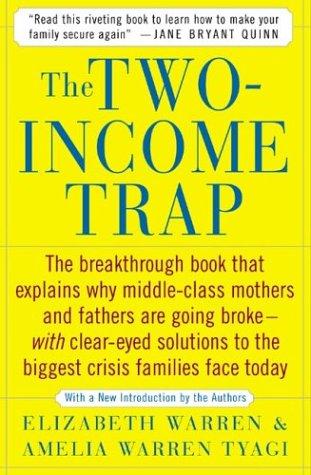
As Elizabeth Warren and Amelia Warren Tyagi documented in The Two-Income Trap, the entry of both parents into the workforce — which accelerated through the 1960s and 1970s — was not a free upgrade in living standards. It was a response to rising fixed costs, including housing. The second income that was supposed to be a bonus became the survival margin. And with both parents working, someone had to watch the children. The grandmother who might have done it lived across town. The neighbor who might have done it faced licensing requirements. The market that filled the void priced itself out of reach.
The Government Built It Once — Then Shut It Down
There is a largely forgotten chapter in American childcare history that makes the current crisis even more striking.
During World War II, with millions of men deployed and women filling defense industry jobs, the federal government faced an urgent childcare problem. Congress responded with the Lanham Act of 1941, funding a national network of childcare centers for the children of defense workers. By 1945, more than 3,100 federally funded centers were operating across the country, serving approximately 600,000 children. They were affordable. They were effective. They worked.
In 1946, Congress shut all of them down.
Despite massive public petition — including from the centers' own staff and the families they served — the programs were terminated. The logic: the war was over, women would return home, childcare was no longer a national priority. The infrastructure that had proven affordable, quality care was possible at scale was dismantled in a matter of months. America would not see anything like it again for decades — and the commercial market that filled the void was left to navigate an increasingly burdensome regulatory environment entirely on its own.
The Regulation Machine: How Government Strangled Supply
Childcare regulation exists for legitimate reasons. Children are vulnerable. Standards for safety, supervision, and sanitation make sense. The problem is not that childcare is regulated. The problem is that decades of regulatory accumulation have driven costs to levels that bear no relationship to the underlying economics of caring for children — and that the regulations vary so wildly by state that they function more as a barrier to entry than a quality standard.
The most powerful cost driver is the staff-to-child ratio. State law in the most restrictive jurisdictions requires one adult for every three or four infants. In the least restrictive, one adult may supervise up to twelve children. The difference is not primarily in child outcomes — researchers have found little evidence that the most restrictive ratios produce meaningfully better developmental results for children over age one. But the cost difference is dramatic and direct. More staff per child means higher wages costs per enrollment, which means higher tuition. Research from the American Enterprise Institute found that toddler care in states with 4:1 ratios costs dramatically more than in states with 12:1 ratios — a cost gap driven almost entirely by the regulatory mandate, not the market.
Ratios are only the beginning. States layer on credential requirements — lead teachers must hold associate's or bachelor's degrees in many states, regardless of whether those degrees improve care quality. Facility requirements mandate minimum square footage per child, specific outdoor space, nap room configurations, and fire suppression systems calibrated for commercial buildings. Licensing timelines can stretch to a year or more. And the cost of compliance falls entirely on providers, who pass it to families.
The Home Daycare Problem: Zoning Finished the Job
 Get the book →
When center-based care is too expensive, families turn to home-based alternatives — a neighbor who watches a few children, a family daycare provider operating from a residential property. This is the natural, low-cost tier of the childcare market. It is also the tier that state and local government has most aggressively suppressed.
In many jurisdictions, operating a home-based childcare program requires a separate license from center-based care, compliance with a parallel set of regulations (inspections, ratios, fire codes), and — critically — explicit approval from local zoning authorities. In residential zones that prohibit "commercial activity," a neighbor watching three children for pay can be deemed a zoning violation. The informal care networks that once served working families at affordable rates have been systematically regulated into illegality or non-viability. As Ann Crittenden documented in The Price of Motherhood, the economic contribution of care work — and the cost of suppressing it — has been systematically undercounted and undervalued by policy at every level.
The result is a market engineered for failure. The informal tier — cheapest, most flexible, most community-embedded — is restricted by zoning. The commercial tier — licensed centers — is burdened with mandates that make operations expensive. And the family tier — grandparents in the backyard — was eliminated when zoning law outlawed the housing form that made it possible.
The Worker Paradox: Poverty Wages, Luxury Prices
The most revealing indicator of a government-broken market is this: childcare is simultaneously unaffordable for families and non-viable for providers.
The median wage for a childcare worker in the United States is approximately $13–15 per hour — poverty-level compensation for work that requires training, licensing, genuine skill, and daily responsibility for the development of young children. Centers cannot raise wages without raising tuition, which is already unaffordable. They cannot reduce tuition without cutting wages, which are already inadequate. They cannot absorb the gap. The result: chronic underfunding, high turnover, staff shortages, and provider closures. The number of licensed childcare centers declined in 2025 for the first time in years — a sign that the supply side is contracting, not expanding, just as the affordability pressure peaks.
This is not a market failure in the conventional sense. It is a regulatory failure. A regulated market designed so that the cost of compliance falls on providers, the cost of tuition falls on families, and the wages of workers remain trapped below the surface where neither group can reach them.
What Actually Works
The solutions that have reduced childcare costs where they have been tried share a common thread: they remove regulatory barriers rather than adding subsidy programs on top of a broken structure.
Restore multi-generational proximity. The most powerful childcare policy is not a childcare policy at all — it is ADU reform. When grandparents can legally live on the same property as their adult children, the family care infrastructure that existed before postwar zoning is restored. The states that have reformed their ADU laws are creating the conditions under which families can once again solve their own childcare problem. This is not nostalgia — it is the cheapest, highest-quality childcare option available, and government took it away.
Rationalize staff ratios. States that have reduced infant-to-staff ratio mandates from 3:1 or 4:1 to 5:1 or 6:1 — where research suggests child outcomes are not meaningfully different — have seen measurable reductions in center-based care costs. This is the most direct, fastest-acting lever available to state legislatures. It requires no appropriation. It requires only a willingness to revise a regulatory standard.
Legalize and streamline home-based care. Multiple states have passed legislation explicitly permitting home-based childcare providers in residential zones, subject to simplified licensing rather than commercial-facility requirements. Idaho, Arizona, and others have reduced credential requirements for home providers caring for small numbers of children. The effect is to restore the informal care market that existed naturally before it was regulated out of existence.
Streamline licensing timelines. Centers waiting 12–18 months for licensing approval cannot serve families. Several states have moved to 60-day licensing decisions for new providers — mirroring the ADU permit reform that worked in California — and have seen new supply enter the market in response.
▸ ADU reform to restore grandparent proximity (zero cost to government)
▸ Rationalize staff-to-child ratios to evidence-based standards
▸ Legalize home-based care in residential zones
▸ Streamline provider licensing to 60-day decisions
▸ Remove college degree requirements for home-based providers
▸ Allow market wages to rise by reducing compliance costs
The Arc
The childcare crisis is real. The suffering of families paying $2,000 a month for infant care while a childcare worker earning $14 an hour watches their child is real. The center closures are real. The workforce exits are real.
But the crisis is not the natural order of things. It is the accumulated outcome of specific policy decisions: postwar zoning that destroyed family proximity, a federal childcare program shut down the moment the war ended, licensing regimes that make home-based care illegal, staffing mandates calibrated for liability protection rather than child outcomes, and facility requirements that price new entrants out of the market before they open their doors.
The arc of progress on childcare is the same arc as housing: it bends up when government gets out of the way and lets families and communities organize care the way they always have. The evidence from states that have deregulated home-based care, rationalized ratios, and reformed ADU laws is early but consistent. Supply rises. Costs fall. Workers can be compensated from the savings.
The grandmother who watched the children while the young family saved enough to build their own home was not a policy program. She was the market. And she was fifty feet away — until the government drew a line and said that was no longer allowed.
Fixing childcare in America does not require a new federal program. It requires repealing the old ones that broke it.
| States where infant care costs more than in-state college tuition | 33 of 50 |
| Federally funded WWII childcare centers (Lanham Act, 1945) | 3,100+ |
| Children served by Lanham Act centers at peak | 600,000 |
| Year Congress shut them all down | 1946 |
| Annual cost — least restrictive staff ratio states | ~$7,254 |
| Annual cost — most restrictive staff ratio states | $20,000+ |
| Median childcare worker wage (national) | $13–$15/hr |
| Licensed childcare centers in U.S. (2025) | 94,327 (↓ 1% from 2024) |