
The conventional story about consciousness goes like this: it is a product of the brain. Map enough neurons, simulate enough connections, and eventually you will explain why any of it feels like something from the inside. This is the materialist consensus — and it has one insurmountable problem. It does not actually address the question.
Neuroscientists can tell you which brain regions activate when you see red. They cannot tell you why you experience redness at all. That gap — between the physical description and the felt reality — is what philosopher David Chalmers named the “hard problem of consciousness” in 1994. Thirty years later, it remains unsolved. Not because science is failing. Because the question may require a fundamentally different frame than the one we have been using.
| Number | What It Means | Source |
|---|---|---|
| ~86 billion | Neurons in the human brain — each forming up to 10,000 synaptic connections | Azevedo et al., 2009 |
| 0 | Scientific consensus on what consciousness is — the hard problem remains open after 30 years | Chalmers, 1994 → 2024 |
| 40% | Of the human cerebral cortex devoted to visual processing — yet 97% of visual data is filtered before reaching awareness | MIT Brain & Cognitive Sciences |
Two Camps, No Winners
The mainstream scientific response to the hard problem splits into two camps. The first, championed by researchers like Daniel Dennett, argues the problem is an illusion — consciousness is just what complex information processing feels like from the inside, and once we fully describe that processing, the mystery dissolves. The second camp, which includes Chalmers himself and Nobel laureate Roger Penrose, insists that felt experience cannot be reduced to computation, no matter how sophisticated. Something about subjective experience is genuinely different in kind, not just degree.
Both camps have produced decades of compelling arguments. Neither has won. That standoff is itself informative: it suggests that the usual tools of empirical science — measurement, falsification, replication — may be reaching their limit on this particular question. Not because the question is unanswerable, but because the question may be asking about the measurer, not the measured.
Integrated Information and Global Workspace: The Leading Contenders
The two most mathematically rigorous theories of consciousness today are Integrated Information Theory (IIT), developed by Giulio Tononi, and Global Workspace Theory (GWT), associated with Bernard Baars and Stanislas Dehaene. IIT proposes that consciousness is identical to integrated information — a property it quantifies as Phi (Φ). GWT holds that consciousness arises when information is broadcast globally across the brain, becoming available to multiple cognitive systems simultaneously.
Both theories make predictions. Both have problems. IIT implies that simple systems with high integration — including some non-biological systems — could be conscious, a conclusion that unsettles many researchers. GWT correlates well with brain imaging data but has difficulty explaining why global broadcasting should produce subjective experience rather than just more computation. In 2023, a large-scale adversarial collaboration published in Nature Neuroscience concluded that neither theory was definitively confirmed — a historic outcome that changed both camps’ confidence levels.
This is not a failure. It is science doing exactly what it should: eliminating bad answers so we can find better ones. The value here is not that we do not know — it is that we now know more precisely what we do not know.
Donald Hoffman’s Radical Alternative
UC Irvine cognitive scientist Donald Hoffman has proposed a more radical solution: our perceptual systems did not evolve to show us reality as it is. They evolved to show us what we need to survive. Hoffman calls this the Interface Theory of Perception. Just as desktop icons on a computer screen represent — but do not resemble — underlying code, our experience of space, time, and objects may be a user interface, not a window.
In Hoffman’s model, consciousness is not produced by the brain. Rather, the brain — including all of neuroscience’s physical measurements — is itself a representation within consciousness. This inverts the standard materialist picture entirely. Counterintuitive? Yes. But Hoffman’s formal modeling, using evolutionary game theory, shows that organisms perceiving reality as it is are consistently outcompeted by organisms perceiving fitness payoffs. Truth and survival are separate evolutionary pressures — and survival won.
This connects to broader shifts in how we think about technology and intelligence. As we noted in our analysis of the invisible workforce already transforming organizations, artificial systems can be extraordinarily capable without any inner life. Understanding the difference between functional performance and genuine experience may be one of the most consequential questions of the next century.
What Meditation Research Adds
Contemplative traditions have claimed for millennia that direct investigation of experience — not brain imaging, but first-person inquiry — reveals something about consciousness that third-person science cannot access. Modern neuroscientists initially dismissed this. They are increasingly less dismissive.
Studies of long-term meditators show structural brain differences, including increased cortical thickness in attention-related areas, that correlate with reported differences in how experience presents itself. More intriguingly, meditators can reliably distinguish between types of attention in real time during fMRI scanning — a first-person precision that standard cognitive science rarely achieves. This does not validate every claim made by contemplative traditions. It does suggest that first-person methodology, applied rigorously, can generate reproducible data about consciousness that third-person methods cannot easily reach.
 Get the book →
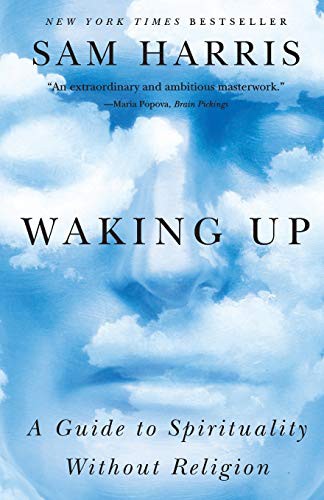
Sam Harris, neuroscientist and philosopher, explores this intersection in Waking Up: A Guide to Spirituality Without Religion — one of the clearest arguments that the investigation of consciousness need not be mystical to be serious.
Why This Matters Beyond Philosophy
The hard problem of consciousness is not merely an academic puzzle. Its resolution — or lack thereof — has direct implications for how we design AI systems, how we understand mental illness, how we approach end-of-life care, and how we build institutions that take human experience seriously.
If consciousness is purely computational, then sufficiently complex AI systems are moral patients. If it is not, the entire field of machine consciousness is building toward a category error. If Hoffman is right and perception is a constructed interface, then entire fields of cognitive behavioral therapy may need rethinking — not because they do not work, but because we may be misidentifying why they work.
These questions intersect with longer-arc human trends. As covered in our piece on the life expectancy revolution, extending human life without understanding what makes that life meaningful — from the inside — is solving half the problem.
Further Reading
- The Hard Problem of Consciousness — David Chalmers (ed.) — The original philosophical framing, still essential.
- The Case Against Reality — Donald Hoffman — The most radical and rigorously defended alternative to materialism.
- Waking Up — Sam Harris — A neuroscientist’s case for taking contemplative experience seriously.
The Arc: The hard problem of consciousness is not a sign that science is failing — it is a sign that science is finding the edge of its standard toolkit. The most honest position in 2025 is not certainty in either direction but a rigorous openness: the evidence increasingly suggests that consciousness is not simply produced by neurons but may be something more fundamental. That conclusion, if it holds, does not shrink the human story. It expands it. The investigation of mind from the inside may turn out to be as generative as the investigation of the cosmos from the outside — and we are still very early.
Affiliate disclosure: This article contains affiliate links. Bold Arc may earn a small commission at no cost to you.
📚 Recommended Reading
A recommended book that goes deeper on this topic.
View on Amazon →Bold Arc earns a small commission on purchases at no extra cost to you.