

The wellness industry has a simple story about meditation: sit down, breathe, reduce stress, repeat. That story is not wrong — but it is severely incomplete. Forty years of serious neuroscientific research on contemplative practice has produced findings far stranger, and far more significant, than the stress-reduction narrative admits. The science is not validating what meditation apps sell. It is pointing toward something that may require a new category entirely.
| Number | What It Means | Source |
|---|---|---|
| $2.5B | US mindfulness industry revenue — selling an ancient practice as a productivity tool | IBISWorld, 2023 |
| 8 weeks | MBSR duration shown to measurably increase gray matter density in the hippocampus | Hölzel et al., Harvard, 2011 |
| 10,000+ | Published peer-reviewed studies on meditation indexed in PubMed — more than any decade prior | PubMed, 2024 |
What the Research Actually Shows
 Get the book →
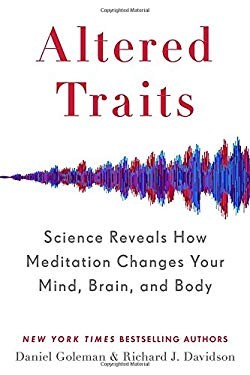
The definitive audit of the meditation evidence comes from psychologist Daniel Goleman and neuroscientist Richard Davidson, who have spent their careers separating signal from noise in the contemplative research literature. Their conclusion, documented in Altered Traits: Science Reveals How Meditation Changes Your Mind, Brain, and Body, is sobering: most published meditation studies are methodologically weak. Poor controls, short durations, self-selected samples, and publication bias have allowed an uncritical enthusiasm to outpace the evidence.
But that is not the end of the story — it is the beginning of a more interesting one. When Goleman and Davidson isolate the studies that meet rigorous standards, a consistent picture emerges. Short-term meditation practice (8–12 weeks) reliably reduces stress reactivity and improves attentional focus. These are real effects. They are also modest. The more extraordinary findings emerge only in studies of long-term practitioners — people with thousands of hours of meditation experience — and they point toward something that stress reduction language cannot adequately describe.
The Long-Term Practitioner Data
Davidson’s lab at the University of Wisconsin has studied the brains of experienced Tibetan Buddhist monks — some with over 50,000 hours of practice — using high-density EEG. The results were striking enough that Davidson initially disbelieved them. These practitioners exhibited gamma wave synchrony of a kind not previously recorded in healthy human subjects during deliberate practice states. Gamma oscillations, associated with high-level cognitive binding and integration, appeared to arise rapidly, with unusual amplitude and spatial coherence, in meditators compared to controls.
More consequentially, Davidson’s research identified what he calls “altered traits” — not temporary states achieved during meditation, but stable, lasting changes in baseline personality and neural architecture. Long-term meditators show measurably reduced amygdala reactivity to emotional stimuli, faster recovery from stress, and structural changes in the anterior insula and prefrontal cortex associated with enhanced interoception and emotional regulation. These are not mood effects. They are architectural changes in the brain’s default response to experience.
What Mindfulness Apps Are Missing
The commercial mindfulness movement has correctly identified that meditation has real benefits and that most people can access them without becoming monks. What it has largely missed — for understandable commercial reasons — is the dose-response relationship. The benefits that appear in 8-week studies are real but mild. The more significant findings appear only at orders of magnitude more practice time.
This matters because it changes what the evidence is actually recommending. An honest reading of the data does not support “meditate 10 minutes a day and transform your life.” It supports something closer to “meditation practice, pursued seriously over years, can produce measurable changes in baseline human experience that have no pharmaceutical equivalent.” That is a different value proposition — and a more demanding one.
The distinction parallels something we observed in our analysis of how the public consistently misreads new technology: we tend to overclaim short-term effects and underestimate long-term ones. Meditation may be the clearest example of this error running in both directions simultaneously — overhyped for what a few weeks can do, and dramatically underestimated for what sustained practice produces.
The Contemplative Science Frontier
The emerging field of contemplative neuroscience is now taking first-person methodology seriously in ways that mainstream cognitive science resisted for decades. Researchers at the Mind & Life Institute — founded through a collaboration between Francisco Varela and the Dalai Lama — have pioneered neurophenomenology: the rigorous pairing of first-person reports from trained meditators with third-person physiological data. The hypothesis is that subjective expertise in introspection, developed through thousands of hours of practice, can generate reproducible data about consciousness that standard experimental methods cannot access.
This connects to the broader investigation of consciousness we covered in our piece on the hard problem: the first-person investigation of mind may not be less scientific than third-person measurement — it may be a different and complementary scientific instrument.
 Get the book →
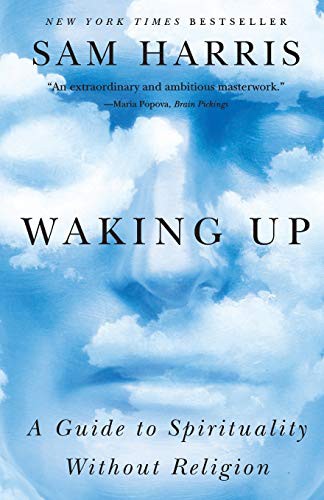
Sam Harris argues this case compellingly in Waking Up — that secular contemplative practice pursued rigorously is a genuine form of inquiry, not self-indulgence.
Further Reading
- Altered Traits — Daniel Goleman & Richard Davidson — The most rigorous audit of meditation science available.
- Waking Up — Sam Harris — A secular case for contemplative practice as serious inquiry.
Bold Arc Recommends for Meditation & Sleep
For readers ready to act, these are the most natural next clicks. If you buy through these links, Bold Arc may earn a commission at no extra cost.

The Arc: The wellness industry built a $2.5 billion business on a real finding — and then stopped there. The research that has not made it onto app store screenshots is more remarkable: that sustained contemplative practice can produce stable, lasting changes in baseline human experience that no other known intervention matches. This is not mysticism. It is the conclusion of rigorous, long-term neuroscience from credentialed institutions. The implication is not that everyone should become a monk. It is that the outer ceiling on human psychological development is much higher than modern culture has bothered to look at — and that the data is now there to make the climb.
Affiliate disclosure: This article contains affiliate links. Bold Arc may earn a small commission at no cost to you.
