
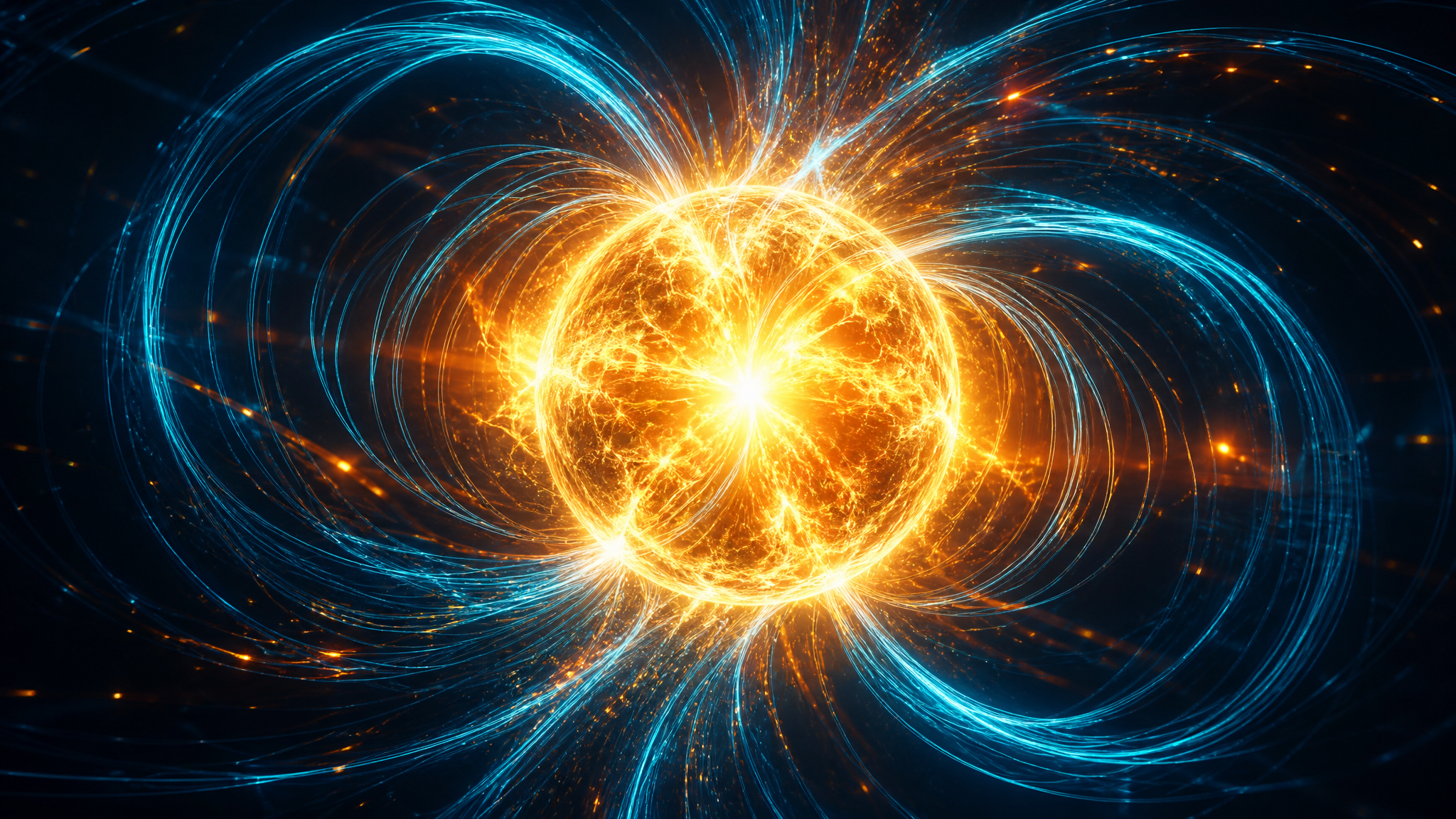
After seven decades as the punchline of clean energy — always twenty years away, always — fusion is colliding with a different kind of deadline. Not the rhetorical kind. The engineering kind: first plasma, first net energy, first commercial megawatt. The companies and nations chasing it are no longer debating whether it works. They are racing to build it first.
On December 5, 2022, scientists at the National Ignition Facility in Livermore, California, fired 192 laser beams at a target roughly the size of a pencil eraser. The result was 3.15 megajoules of energy output from 2.05 megajoules of input — the first time a fusion reaction had produced more energy than the lasers delivered. It was, by the most important definition, ignition.
NIF repeated the achievement multiple times through 2023. The milestone didn’t just matter symbolically. It closed the last major scientific question mark about inertial confinement fusion and accelerated the timelines of every private company in the field. If the physics worked, the engineering was suddenly the limiting factor. And engineering is something investors understand how to fund.
The Private Race Joins the Government Marathon
The traditional narrative of fusion has been institutional: the International Thermonuclear Experimental Reactor, known as ITER, assembling slowly in southern France with contributions from 35 nations and a budget that has grown to roughly $22 billion. ITER is now more than 90 percent complete — its 23,000-tonne tokamak assembly is the largest engineering project on Earth — and it is expected to achieve first plasma in the late 2020s, though commercial electricity generation was never part of its mandate. ITER’s job is to prove the concept at scale. The commercial translation was always someone else’s problem.
That someone else has arrived in force. The Fusion Industry Association tracked more than $6 billion in private investment flowing into fusion companies by the end of 2023, with at least 40 private ventures now operating globally. The two most closely watched are Commonwealth Fusion Systems, a MIT spinout, and TAE Technologies, both targeting commercial fusion power around 2030.
Commonwealth Fusion’s bet is on high-temperature superconducting magnets. In 2021, the company’s SPARC magnet prototype achieved 20 Tesla — the strongest magnetic field ever produced by this class of magnet, strong enough to confine a fusion plasma in a machine small enough to fit inside a warehouse rather than a stadium. The implications are significant: smaller reactors are cheaper reactors, and cheaper reactors are commercially deployable reactors. CFS broke ground on its SPARC facility in Devens, Massachusetts in 2022 and expects net energy demonstration before the end of the decade.
What “Net Energy” Actually Means for the Grid
The common question is: if fusion works, what does it actually produce? The fuel is deuterium — extracted from seawater — and tritium, which can be bred inside the reactor from lithium. Both are effectively inexhaustible at civilizational timescales. The reaction produces helium, not carbon dioxide. There is no meltdown risk of the kind associated with fission; a disruption causes the plasma to extinguish, not escalate. The waste products decay to safe levels within decades, not millennia.
“The physics is solved. What remains is engineering at scale — and we’ve solved harder engineering problems before.” — Dennis Whyte, former director of MIT’s Plasma Science and Fusion Center
The phrase “electricity too cheap to meter” was famously overpromised about nuclear fission in the 1950s and became a historical embarrassment. Fusion researchers are careful not to repeat the claim. What they do say is that a mature fusion grid would produce baseload power with no carbon emissions, no proliferation risk, and no dependence on geography — no sunny desert or windy coastline required. For context on what happens when energy costs collapse, see the nuclear renaissance now underway in parallel.. Every country on Earth has access to seawater.
The ITER Factor and the 2030 Convergence
ITER’s role in this ecosystem is often misunderstood. The reactor isn’t designed to produce electricity — it’s the definitive scientific proof that a tokamak-style fusion reactor can sustain a burning plasma at net gain, at sufficient scale to inform a commercial design. When ITER achieves first plasma, it will validate the engineering tolerances that private companies are already designing around. It functions like a publicly-funded proof-of-concept that de-risks $20 billion in private capital downstream.
The convergence of ITER’s completion, CFS and TAE’s commercial timelines, and the post-NIF ignition confidence is producing something genuinely new: a credible 2030s scenario for commercially operating fusion power plants. Not demonstration projects. Actual grid-connected reactors selling electricity to utilities.
The Remaining Hurdles
The engineering problems that remain are genuinely hard. Tritium breeding inside a live reactor has never been done at scale. The materials that must contain a plasma hotter than the sun’s core face neutron bombardment that degrades them in ways that are still being characterized. Grid integration of a new baseload source at commercial scale is a regulatory, political, and infrastructure challenge as much as a technical one.
But the nature of what’s hard has changed. Ten years ago, skeptics questioned whether ignition was even achievable. That question is closed. Today’s hard problems are production engineering, supply chains, and regulatory frameworks — the same category of difficulty that solar and battery storage have been working through for a decade, and which they are largely winning.
The difference between “fusion is always twenty years away” and “fusion is ten years away and we have receipts” is not semantic. It is the difference between a metaphor and a schedule. Commonwealth Fusion has a construction site. ITER has a building. NIF has a data set. The evidence base has changed. The question now is which company builds the first commercial reactor — not whether anyone will.
Fusion energy is a capstone of the How Far We Can Go dimension — not just geographically but technologically. A civilization with unlimited clean energy is a civilization that can affordably desalinate water, synthesize food, eliminate energy poverty, and extend its reach into space. The physics constraint on fusion has been removed. What follows is an engineering and policy sprint — and on historical evidence, those are sprints humanity tends to win.
-
The Star Builders by Arthur Turrell
The best single account of the private fusion race — written by a plasma physicist who toured every major lab. Essential reading before the first commercial fusion announcement lands. -
Energy: A Human History by Richard Rhodes
Pulitzer winner Rhodes traces every major energy transition in history. Essential context for understanding why fusion would be the most consequential energy transition yet.
📚 Recommended Reading
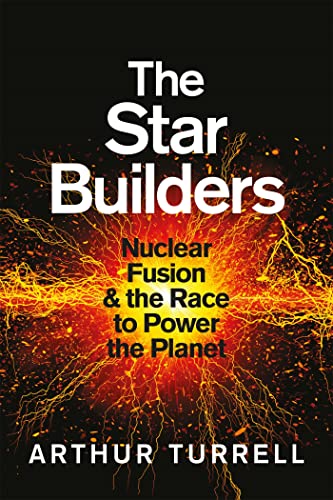
A recommended book that goes deeper on this topic.
View on Amazon →Bold Arc earns a small commission on purchases at no extra cost to you.