
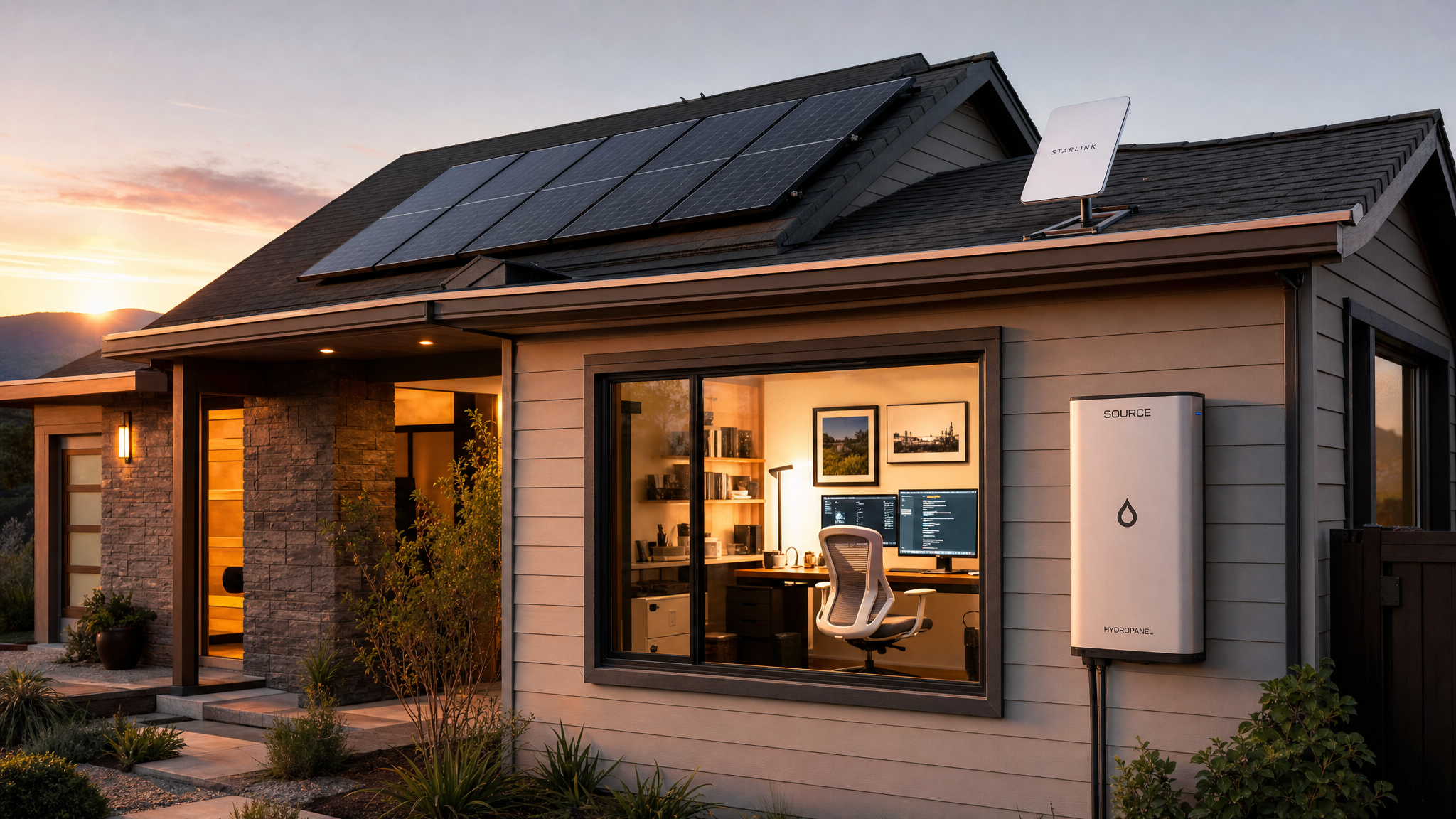
For most of human history, access to the four things that civilization runs on — energy, clean water, communication, and computing power — required connection to large, centralized infrastructure. A power grid. A water main. A cable strung from a pole. A data center owned by someone else. If that infrastructure reached you, you had access. If it didn’t, you waited. If you couldn’t afford it, you went without.
Technology is changing that. Not gradually, and not in one area. In all four, simultaneously.
You can now plug a solar panel into a wall outlet and immediately generate your own electricity — no permit, no contractor, no utility approval. You can own a $3,000 desktop computer that delivers the AI computing power of a million-dollar data center from five years ago. You can point a satellite dish the size of a pizza box at the sky and receive fiber-competitive internet speeds from orbit, anywhere on Earth. You can pull clean drinking water directly from the humidity in the air, with no pipe, no aquifer, no municipal connection required.
None of these are prototypes. None require a grant or a government program. Every one of them is a product on the market today.
The Four Systems — At a Glance
What is happening is the same in each case: the capabilities that once required massive, expensive, centralized infrastructure are becoming available to individuals. To families. To communities that never had access before. The scale is collapsing. The reach is expanding. The four systems that civilization has always depended on are becoming personal.
This is what human progress looks like when technology reaches the infrastructure of daily life.
The Pattern Nobody Is Naming
Four distinct industries — energy, compute, communication, and water — are experiencing the same structural shift at the same time. In each case, technology that once required billion-dollar centralized infrastructure is collapsing into a device small enough to fit on a balcony, a desk, a rooftop, or a backyard.
This is not a coincidence. It is what markets do.
When private companies compete to serve customers better than incumbents can, they drive costs down curves that look impossible until they aren’t. Solar panels followed Swanson’s Law — a 90% cost reduction over 13 years, driven by thousands of manufacturers competing to outperform each other. Chip performance followed Moore’s Law — but the law is just a name for what happens when Intel, AMD, and TSMC race to outcompete each other every 18 months. Launch costs followed Wright’s Law — SpaceX competing against ULA and Arianespace until the price of putting a kilogram into orbit collapsed by 95%.
“The laws are not laws of physics. They are observations of what competition does to price and capability when you let it run.”
Energy: The Panel You Can Plug In
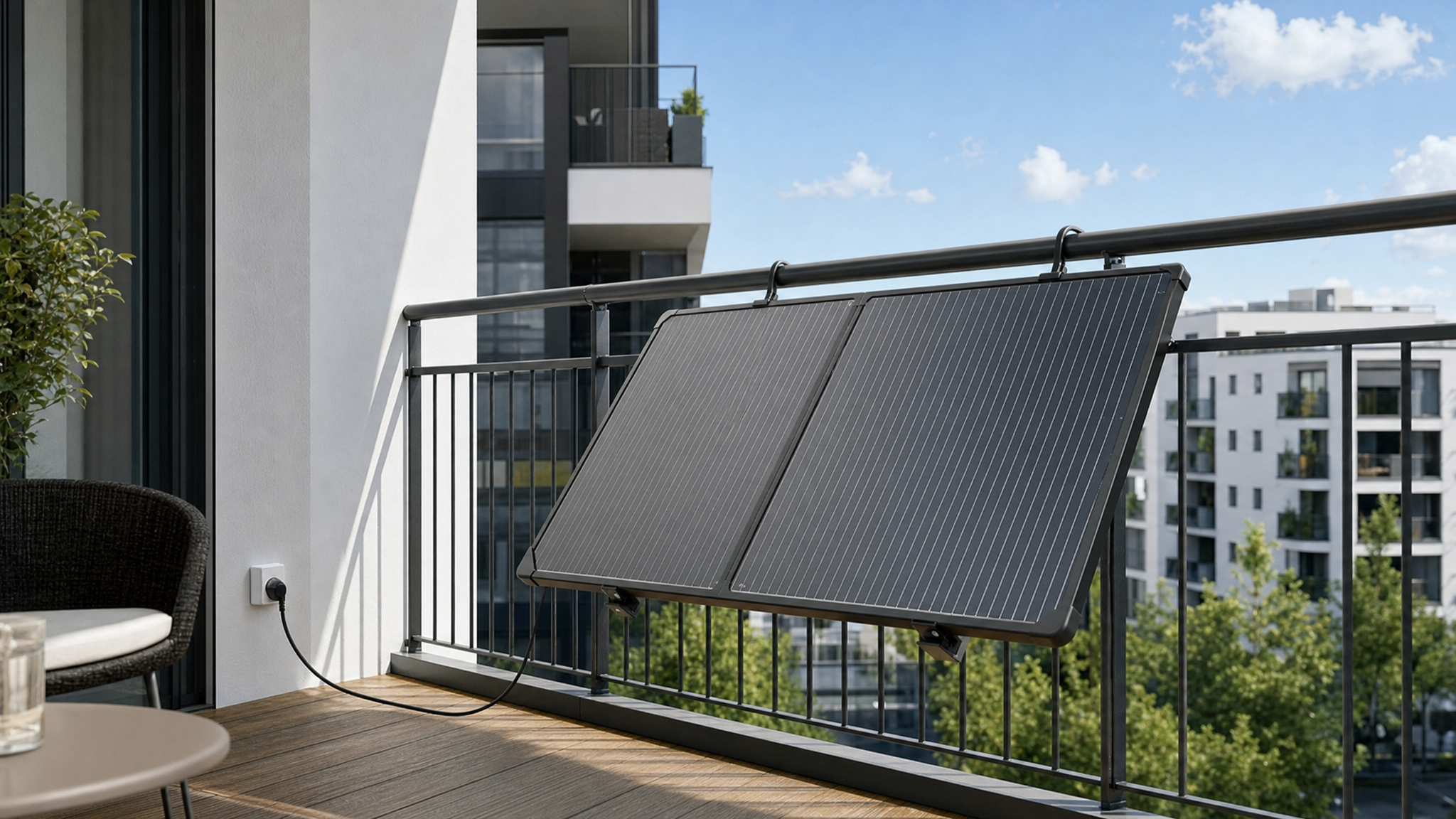
You can now buy a solar panel, take it home, mount it on a balcony railing or yard stake, plug it into a standard wall outlet, and immediately start cutting your electric bill. No contractor. No permit. No utility approval required.
This is called plug-in solar — sometimes balcony solar or plug-and-play solar — and it has quietly grown into a significant consumer movement. In Europe, millions of units are already deployed. In the United States, 28 state legislatures are currently considering bills to legalize it.
The cost curve tells the story. Solar panel prices have dropped 90% since 2010. That collapse in cost — driven by manufacturers competing to build better panels at lower prices for decades — eventually produced something remarkable: a panel cheap enough, small enough, and simple enough to plug into any wall outlet. What began as a technology for utility-scale power plants has become a household appliance.
Swanson’s Law, named for the founder of SunPower, observed this pattern decades ago: every time solar manufacturing capacity doubles, costs fall 20%. Forty years of that curve later, the panel is in your living room.
What you can do with this today: A 400W balcony solar kit from brands like Anker, EcoFlow, or Zendure runs $400–$800. In a typical American home, it reduces electricity bills by 10–20% with zero installation. In a high-electricity-cost market — California, New York, Germany — the payback period is 2–3 years.
Compute: A Data Center on Your Desk
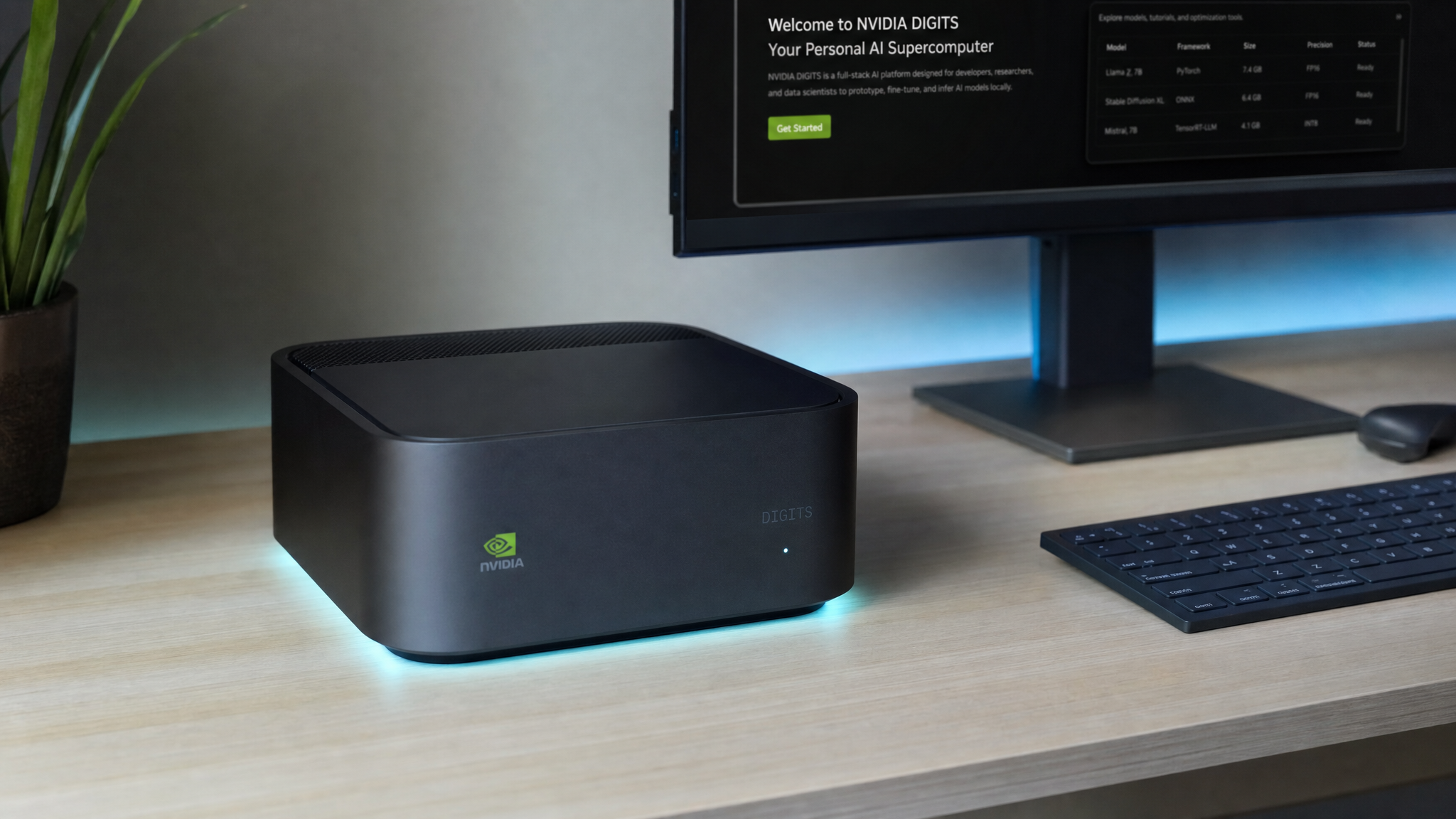
In January 2025, Nvidia unveiled Project DIGITS — a personal AI supercomputer powered by the GB10 Grace Blackwell Superchip. One petaflop of AI compute. Runs large language models up to 200 billion parameters. Sits on a desk. Costs $3,000. Plugs into a wall outlet.
In 2020, that level of compute required a room full of servers, a data center contract, a cooling system, and a budget with six figures in it. Today it is a desktop appliance that any researcher, developer, student, or entrepreneur can own outright.
The implications extend far beyond AI research. Local compute means your data never leaves your home — no cloud provider, no terms of service, no exposure. It means no outage when AWS goes down. It means a researcher in Lagos or rural India has access to the same computational resources as one at MIT or Stanford.
The data center — the most capital-intensive piece of infrastructure in the modern economy — just moved into the home. Not as a stripped-down version. As the real thing.
Moore’s Law describes what happened: chip performance doubled roughly every 18 months for fifty years. That curve, compounded long enough, eventually produced a desktop computer powerful enough to do what required a server room a decade ago. The technology didn’t become personal because anyone planned it that way. It became personal because the math of continuous improvement ran long enough to get there.
Communication: Connectivity Without Infrastructure
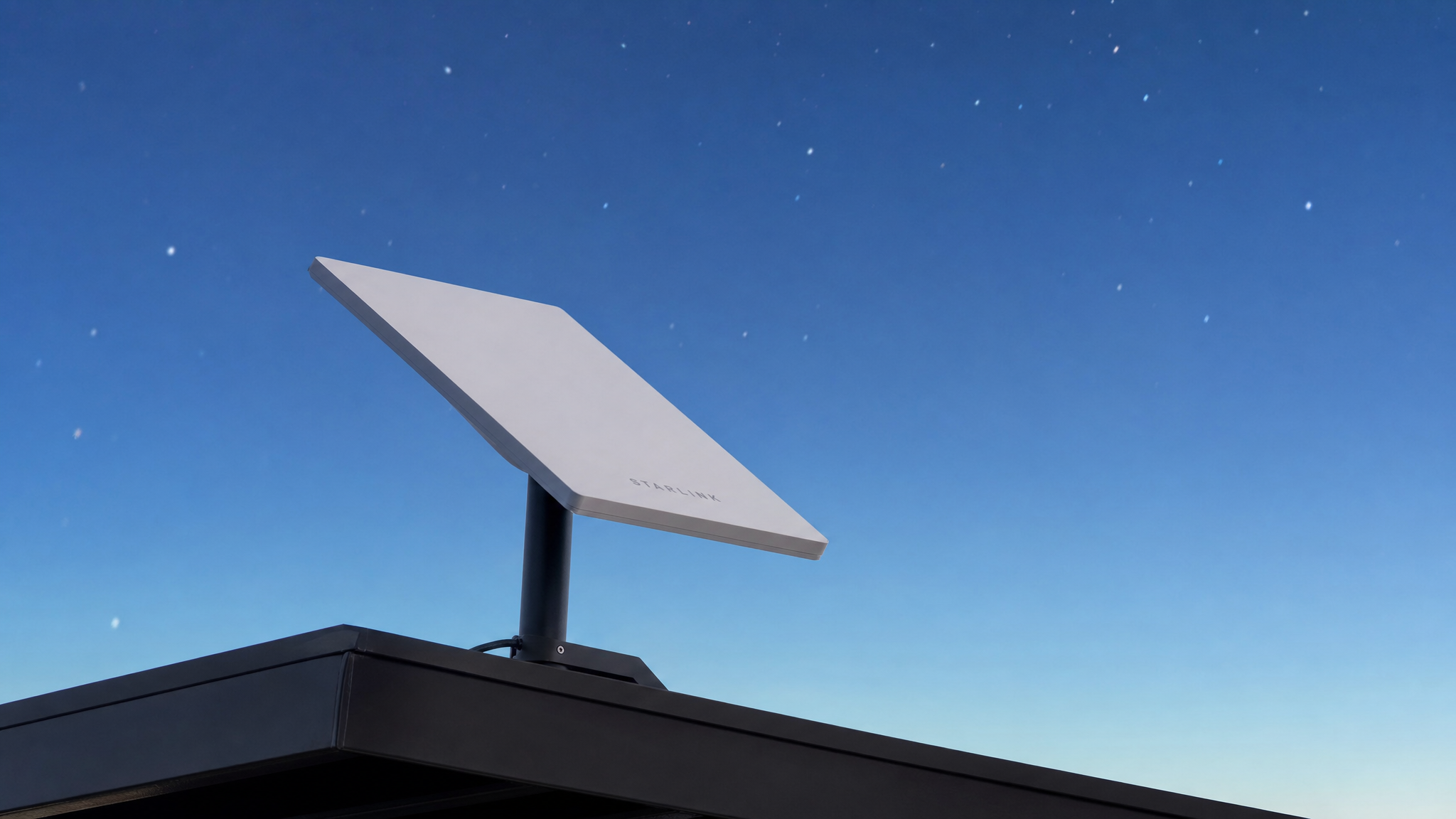
Fiber is the gold standard for internet connectivity. It is also buried in the ground, costs thousands per mile to install, and does not reach 3.5 billion people. Building it requires negotiating rights-of-way, trenching streets, and navigating franchise agreements with local governments. It is infrastructure in the most centralized, capital-intensive sense of the word.
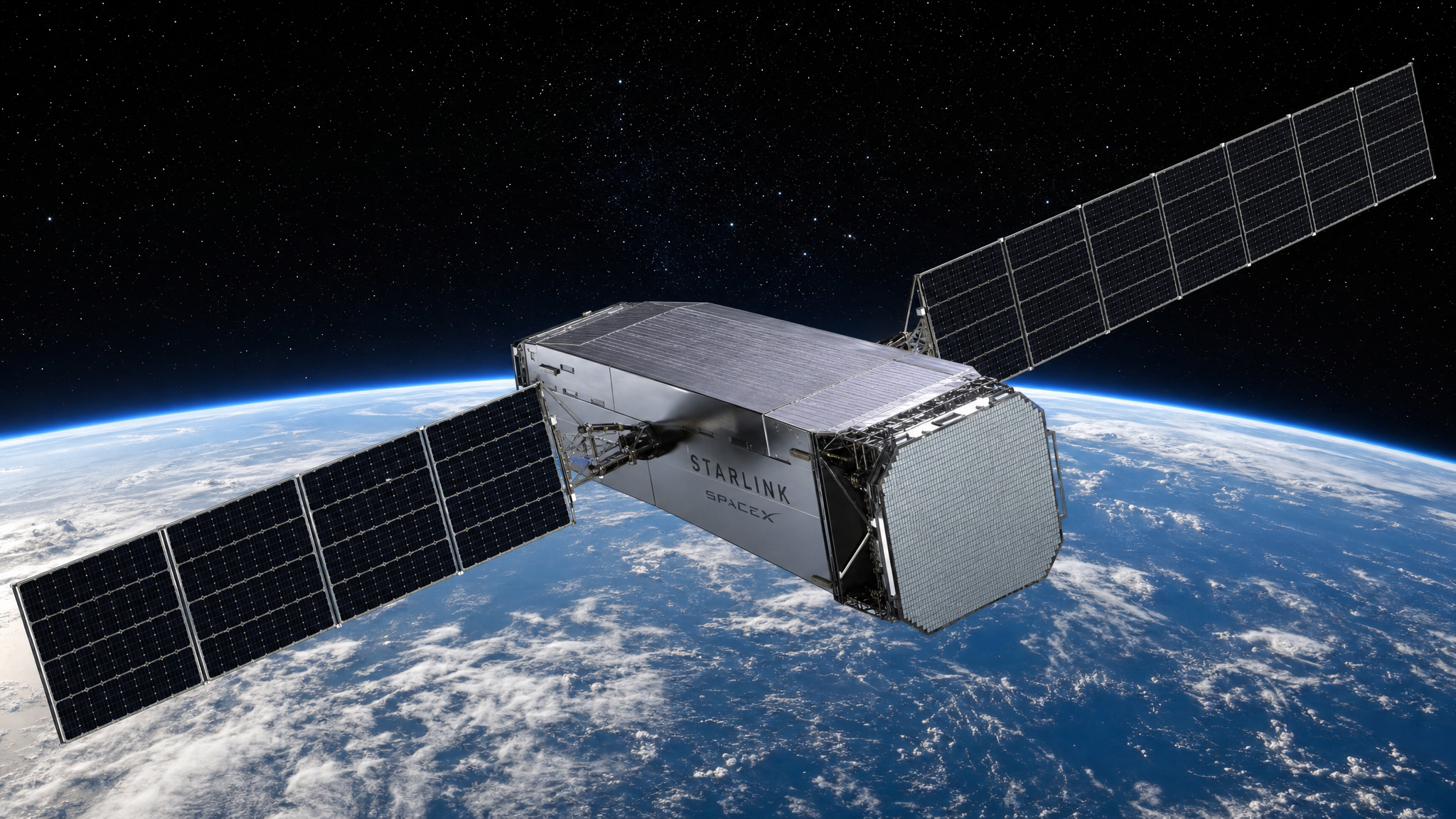
Starlink doesn’t need the ground. A dish the size of a pizza box, a clear view of the sky, and you have speeds of 100 to 400 Mbps — anywhere on earth. Rural Montana. A boat in the Pacific. A village without a telephone pole in sight. It costs $120 a month and $349 for the hardware. No contract. No installation crew. No franchise territory your address has to happen to fall inside.
What does 100 Mbps actually mean for your home?
The numbers matter, and they’re rarely explained. Here is what a typical household actually uses — and what Starlink, current and V3, delivers against it:
The conclusion the numbers reach on their own: today’s Starlink already covers what any household actually needs. V3 matches the premium tier that cable companies have used as a competitive moat for a decade — and delivers it everywhere those cable companies chose not to go.
What V3 actually changes — the math done for you
SpaceX’s V3 satellite is a different class of hardware. Each one delivers 1 terabit per second of downlink capacity. The current V2 Mini delivers about 80 gigabits. That is a 10× increase per satellite. But V3 satellites are also larger — only Starship can carry them — and Starship deploys 60 per launch versus Falcon 9’s 23-28. More satellites per launch, more capable per satellite. The combined effect is roughly 20× more capacity added to the network per launch.
Here is what that means in plain terms: SpaceX can now add the equivalent of 20 old launches worth of network capacity with a single Starship flight. The V3 constellation, once deployed, will be able to serve dramatically more users at dramatically higher speeds — without asking anyone to share bandwidth with their neighbors in a congested cell.
“The speed your ISP charges a premium for — delivered from space, to any address on Earth.”
Does this end the cable monopoly?
The honest answer: not everywhere, not immediately. In dense cities, fiber providers will retain a cost and performance advantage for several more years. But in the suburbs, exurbs, and rural communities where most Americans who have been stuck with one ISP actually live — V3 is a direct competitive alternative for the first time in history.
Cable companies built their monopolies by being the only ones who ran a wire to your house. That wire took decades to install and billions in capital. No competitor could match it. That structural advantage is what V3 eliminates. Not a wire. Not a franchise agreement. A satellite in orbit that serves your address the same as every other address on the planet.
Oppenheimer’s June 2026 research note framed it plainly: SpaceX stands to disrupt a $1.6 trillion U.S. communications market. The incumbents know it. The question is no longer whether satellite internet competes with cable — the question is how fast the transition happens once V3 is fully deployed.
For the 3.5 billion people globally who still lack reliable connectivity, the math is simpler. There is no incumbent. There is no wire to compete with. The satellite is the only option — and for the first time, it is a good one.
Water: The Revolution Nobody Is Covering
Of the four pillars, water is the least known and arguably the most important.
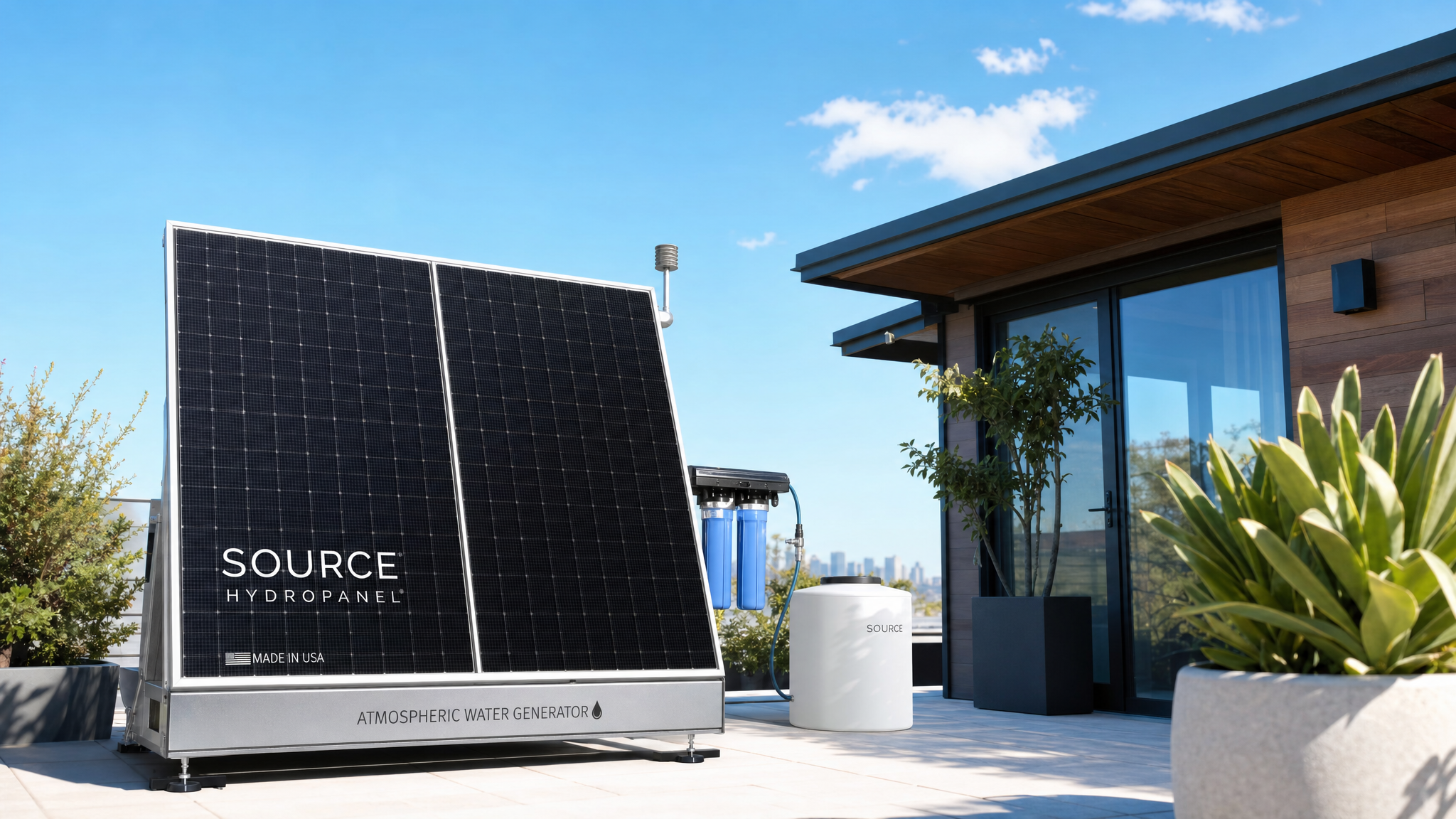
Atmospheric Water Generators — AWGs — pull moisture from ambient air and convert it into clean drinking water. No pipes. No municipal connection. No aquifer dependency. No water main.
This is not experimental. Companies including SOURCE (using solar-powered Hydropanels), Miranda Water Technologies (AtmoCell), and Beyond Water have deployed these systems commercially across multiple continents. Beyond Water alone has produced over 100 million liters across 300+ installations. A SOURCE Hydropanel produces 4 to 10 liters of mineral-balanced drinking water per day from sunlight and air.
For drought-stricken communities, islands cut off from clean groundwater, rural regions without pipe infrastructure, and developing nations where waterborne illness remains a leading cause of death, atmospheric water generation is not a convenience. It is access to something billions of people do not have reliably: safe water, independent of where a pipe was laid decades ago.
The cost curves are early. AWG is where solar was in 2005 — viable but not yet affordable for mass adoption. But the trajectory is established. Investment is accelerating. The same pattern that drove solar from rooftop specialty to plug-in appliance is beginning here.
The Pattern Underneath
What connects plug-in solar, personal supercomputers, satellite internet, and atmospheric water generation is not a single inventor or a government initiative. In each case, the path was the same: the technology improved gradually for years or decades, driven by private companies competing to make it better and cheaper. Then the curve crossed a threshold. The thing that once required industrial scale became something an individual could own.
The media covers each of these as separate stories. Solar is an energy story. Nvidia is an AI story. Starlink is a space story. AWGs are an environmental story. They are all the same story: technology following its natural arc toward accessibility, until capabilities once reserved for institutions become available to people.
“The media covers each of these as separate stories. They are all the same story.”
This is not new. It is the pattern of progress. The printing press put the written word in homes that previously had no books. The automobile put personal transportation in driveways. The smartphone put a communication and computing device in the pocket of someone who had never owned a telephone. Each time, access expanded. Each time, the world changed.
What You Can Do With This Today
This is not a “someday” story. Each of these systems is available as a consumer or prosumer product right now. Here is where the access point is for each:
What Comes Next
The four pillars in this article are the early movers. The pattern does not stop here.
Home energy storage, micro-manufacturing, personal health diagnostics, and micro-agriculture are all following the same curve. As satellite connectivity reaches the latency thresholds required for real-time machine control, autonomous robots — operating anywhere, coordinated from anywhere — become part of the same story.
For most of human history, access to the systems that make modern life possible depended on whether you happened to live somewhere that infrastructure reached. That constraint is loosening. Not everywhere, not instantly, not without cost — but measurably, and faster than most people realize.
The arc of human progress runs through access. The technology is providing more of it, to more people, in more places, than any infrastructure program in history has ever managed. And it is only getting started.