

This article contains affiliate links. Bold Arc may earn a commission at no cost to you.
The question seems almost too simple to take seriously. Can you choose to be happy?
The self-help industry has given this question a bad reputation. Decades of affirmations, vision boards, and motivational posters have cheapened it into something that sounds naive — the spiritual equivalent of telling a drowning person to think positive thoughts. So the serious thinkers mostly stopped asking it. And in doing so, they abandoned one of the most important questions science has ever answered.
Because the answer — the actual, peer-reviewed, replicated, neurologically verified answer — is: yes. More than you think. In ways more specific than you know.
What Happiness Actually Is
Before we can answer whether happiness is a choice, we have to answer a prior question that almost nobody stops to ask: what is happiness?
The ancient Greeks spent centuries on this. Aristotle distinguished between two fundamentally different kinds of wellbeing. Hedonic happiness — pleasure, positive emotion, feeling good in the moment. And eudaimonic happiness — flourishing, meaning, living well in the fullest sense. These are not the same thing. A person can feel good and live badly. A person can face tremendous difficulty and flourish. Aristotle thought eudaimonia — human flourishing — was the real thing. The pleasant feeling was a byproduct, not the goal.
Modern psychology has largely validated this ancient intuition. The research consistently shows that people who pursue hedonic pleasure — comfort, entertainment, the absence of discomfort — report lower life satisfaction than people who pursue meaning, connection, and growth. We are systematically chasing the wrong target. And we have been for most of human history.
The Proof That Cannot Be Argued With
 Get the book →
Viktor Frankl was a Viennese psychiatrist. In 1942, he was arrested and sent to Auschwitz. His wife, his parents, and his brother died in the camps. He survived four concentration camps. And in that experience — which stripped away everything a person can have stripped away — he observed something that became the foundation of an entire branch of psychology.
The Nazis could control everything. They could take his family, his work, his clothes, his food, his freedom, his physical safety. What they could not take was his attitude toward his suffering. That — the relationship between a person and their own experience — remained his. He watched other prisoners make the same discovery. Some chose to preserve their inner dignity even as their bodies failed. Others surrendered it before their bodies did. The difference was not circumstances. It was choice.
Frankl's insight — documented in Man's Search for Meaning, explored in depth here at Bold Arc — is the most extreme proof available for the proposition that emotional response is ultimately chosen. If it is possible in Auschwitz, it is possible anywhere. What the science has done in the decades since is explain exactly how it is possible — and make the practice accessible to people living ordinary lives.
The Pie Chart That Rewrites the Conversation
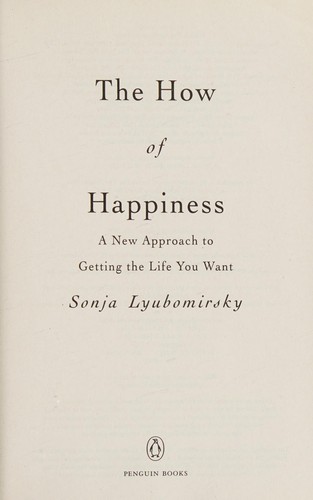
In 2008, University of California psychologist Sonja Lyubomirsky published research that put numbers to what Frankl had observed philosophically. Her synthesis of decades of happiness research produced what has become the most cited finding in the field.
Happiness, she found, can be roughly decomposed into three sources. About 50 percent of your baseline happiness level is determined by your genetic set point — the thermostat you were born with. Some people are constitutionally more cheerful, some more melancholic. This is real. It is not easily changed.
About 10 percent is determined by life circumstances — whether you are rich or poor, married or single, in a comfortable home or a difficult one. Ten percent. This is the number that most people find hardest to believe. It feels like circumstances must matter more. But the research is consistent: once basic needs are met, additional wealth, status, and comfort have remarkably little effect on lasting happiness. People adapt. The new house feels normal. The promotion stops producing the high it promised.
And 40 percent — the largest controllable portion — is determined by intentional activity. What you do. How you think. The practices you build. The relationships you tend. The meaning you pursue. Forty percent of your happiness baseline is a direct function of choices you make, consciously or not, every day.
Why We Get It Wrong: The Misprediction Problem
 Get the book →
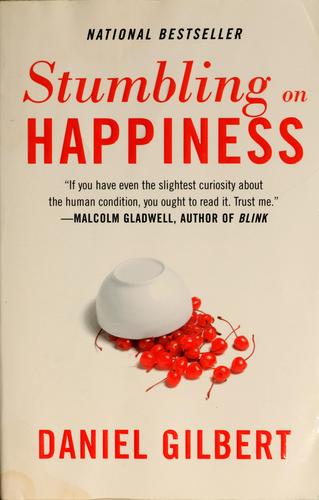
If 40 percent of happiness is within our control, why do most people feel so little control over how happy they are? Harvard psychologist Daniel Gilbert spent his career answering this question. His conclusion, documented in Stumbling on Happiness, is that the human brain is systematically, reliably, predictably wrong about what will make it happy.
We overestimate how much good things will improve our lives. We overestimate how much bad things will damage them. We are wrong about the promotion, the vacation, the new house, the relationship, the diagnosis. The brain constructs a simulation of the future — what psychologists call "affective forecasting" — and that simulation is consistently inaccurate in the same directions.
The mechanism behind the error is adaptation. Humans adapt to almost everything. The new car becomes the familiar car. The dreaded diagnosis becomes the manageable condition. The lottery win returns to baseline within a year. We know this about other people and refuse to believe it about ourselves. Gilbert calls this the "impact bias" — the tendency to overestimate the emotional impact of future events, positive and negative alike.
The practical implication is profound: if we are systematically wrong about what will make us happy, we are systematically investing our time, money, and energy in the wrong things. And the things that actually produce lasting wellbeing — the practices that address that 40 percent — we tend to undervalue precisely because their effects are quiet and cumulative rather than dramatic.
The Elephant and the Rider: Training What Actually Drives
 Get the book →
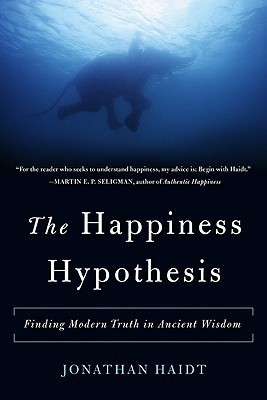
Understanding why we fail to choose happiness requires understanding what actually drives human behavior. Social psychologist Jonathan Haidt offers the most useful framework in his book The Happiness Hypothesis: the elephant and the rider.
The rider is the rational, conscious mind. The elephant is the vast emotional and subconscious system that actually generates most of human behavior. The rider can plan, can articulate goals, can understand that gratitude practices improve wellbeing. But the elephant is what actually moves. And the elephant moves based on deeply ingrained patterns, emotional associations, and habits built over a lifetime — not based on what the rider thinks is a good idea.
This is why willpower fails. You cannot simply decide to be happier any more than the rider can simply force the elephant to change direction. What you can do is train the elephant — gradually, through repeated practice, building the neural pathways that make positive response automatic rather than effortful. The ancient traditions knew this. Meditation, gratitude practice, acts of kindness, the cultivation of virtue — these are not soft suggestions. They are training programs for the elephant. And decades of neuroscience research have confirmed that they work, at the level of brain structure and function.
The 40%: What Actually Works
 Get the book →
Lyubomirsky's research identified twelve intentional activities with demonstrated effects on sustained wellbeing. Not temporary mood lifts — lasting changes in baseline happiness measured over months and years. The list is both surprising and familiar, because it largely confirms what contemplative traditions have encoded for millennia.
Gratitude practice — specifically, deliberate, written acknowledgment of what is good — produces measurable increases in positive affect and life satisfaction with effect sizes that dwarf most pharmaceutical interventions for mild depression. Acts of kindness toward others produce happiness gains in the giver that consistently exceed those in the recipient. Pursuing meaningful goals — not comfort goals, but growth goals — generates sustained engagement and flow. Deep relationships, invested in and maintained, are the single strongest predictor of life satisfaction across every longitudinal study ever conducted.
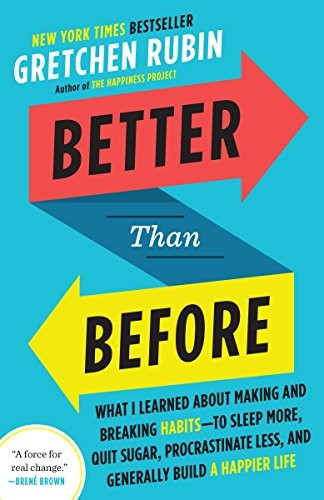
Gretchen Rubin spent a year testing this in practice, chronicled in The Happiness Project. Her conclusion — that the practices work, that the results are real, and that the hardest part is simply deciding to take them seriously — is an experiment anyone can replicate. The science is now well-established enough that replication is reliable.
▸ Gratitude practice (written, specific, regular)
▸ Acts of kindness toward others
▸ Savoring positive experiences intentionally
▸ Pursuing meaningful goals — growth, not comfort
▸ Deep investment in close relationships
▸ Physical activity (the effect on mood rivals antidepressants in mild-moderate cases)
▸ Meditation and mindfulness practice
▸ Cultivating optimism — not naive, but evidence-based
▸ Practicing forgiveness
▸ Living in accordance with your values
The Answer
So — is happiness a choice?
Not in the naive sense. You cannot simply decide to feel happy the way you decide what to have for lunch. The elephant does not work that way. Genetics are real. Circumstances are real. Trauma is real. The complexity of the human emotional system is real.
But in the meaningful sense — the sense that Frankl meant and the science has now confirmed — yes. Forty percent of your happiness baseline is a direct function of intentional choices and practices. The research is replicated, peer-reviewed, and specific about what works. The ancient traditions were pointing at the same territory for thousands of years. Modern neuroscience has now mapped it.
The most important finding is not that happiness is easy. It is that it is buildable. That it responds to practice the way fitness responds to exercise — gradually, cumulatively, with measurable results. That the architecture of a happy life is not determined by what happens to you. It is determined by what you choose to do with what happens to you.
Viktor Frankl understood this in Auschwitz. The science has spent fifty years explaining why he was right. You have more control over this than you think — and now you know exactly where to start.
| Share of happiness determined by genetics | ~50% |
| Share determined by life circumstances | ~10% |
| Share within your direct control | ~40% |
| Harvard happiness study duration (ongoing) | 85+ years |
| Harvard study's #1 predictor of life satisfaction | Relationships |
| Effect of regular physical activity vs. antidepressants | Comparable (mild-moderate) |
| Intentional activities with documented happiness effect | 12 identified |