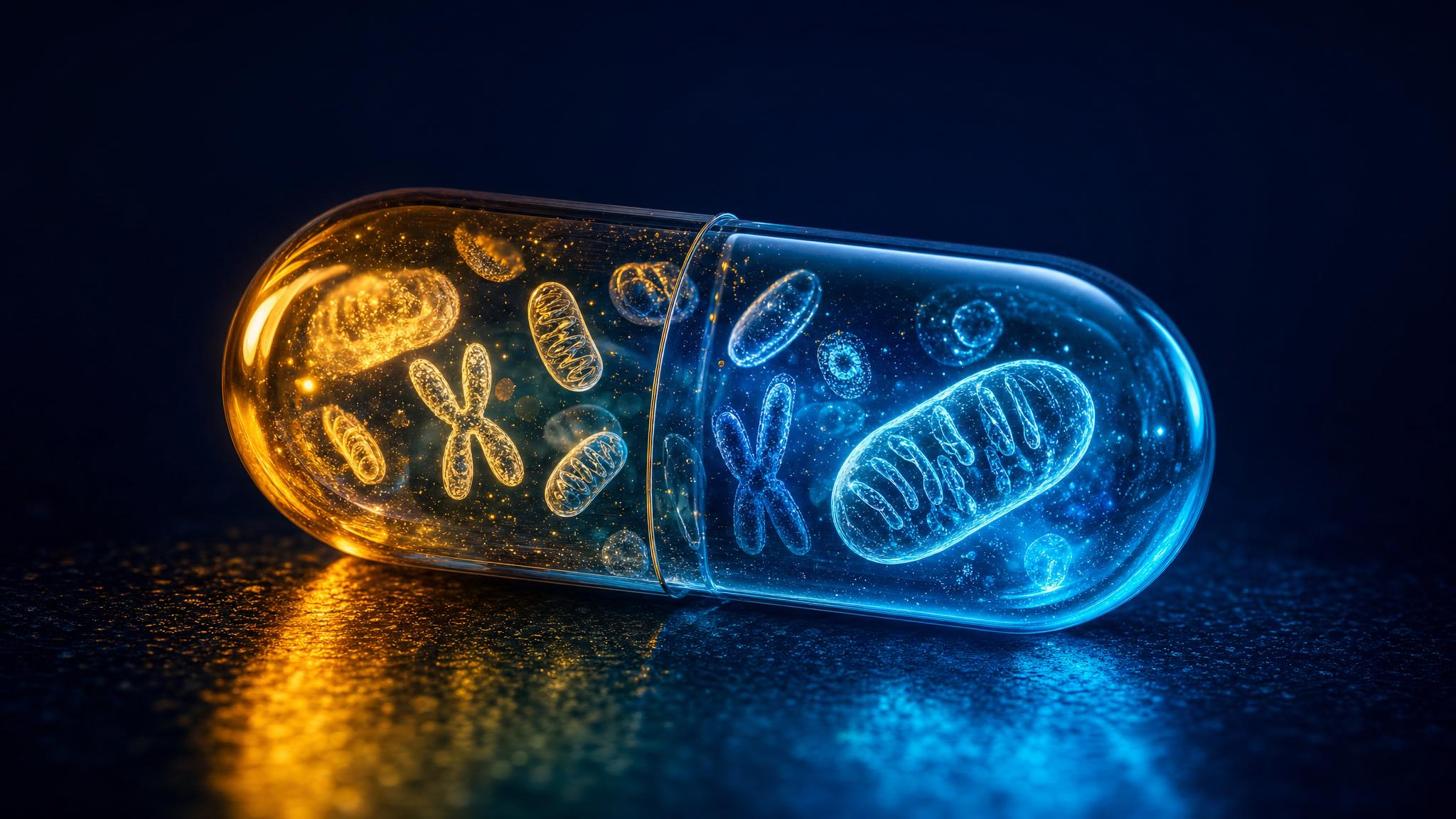
The story most people have absorbed about anti-aging science goes something like this: brilliant researchers have been chasing longevity for decades, making bold claims, and repeatedly failing to produce anything that works in humans. The supplements don’t work. The drugs are dangerous. Aging is a fact of biology, not a disease — and anyone claiming otherwise is selling snake oil in a lab coat.
That story was largely accurate in 2005. It is not accurate in 2026.
Over the past fifteen years, a set of interventions has emerged from basic research into something more substantive: drugs with known mechanisms, replicated animal data, established safety profiles, and early human trial results. These are not the supplements sold at health food stores. They are pharmaceutical compounds that target specific biological processes underlying aging itself — not just the diseases aging causes.
The data is more serious than the media coverage suggests. Here is what has actually been demonstrated.
Not Supplements. Drugs.
The distinction matters enormously. Supplements are sold to anyone who walks into a store, with no requirement to prove efficacy and minimal regulatory oversight. Drugs require clinical trials, peer-reviewed evidence, and regulatory approval before reaching the market. The interventions covered here fall squarely in the second category.
Rapamycin is an FDA-approved immunosuppressant used in organ transplant patients since the 1990s. It has been administered to hundreds of thousands of humans over three decades, producing a substantial safety and side-effect profile. Dasatinib is an FDA-approved cancer drug. Metformin has been prescribed to hundreds of millions of diabetic patients for more than fifty years. These compounds were not invented by longevity researchers — they were discovered to have longevity effects after extensive human use in other contexts.
That prior human exposure is significant. It means the safety data already exists. The question researchers are now asking is not “is this safe?” — that has already been answered to a substantial degree — but “does it work against aging in healthy humans, and at what doses?”
The mechanism-first, evidence-second arc of these drugs is the opposite of supplement culture. Supplement makers observe an effect (or claim to), then sell. Longevity researchers identify a biological pathway, find compounds that interact with it, test in cell lines, test in model organisms, replicate the results across independent labs, and then — only then — begin human trials. The science is harder. The credibility is proportionally higher.
Rapamycin: The Most Replicated Longevity Drug in History
In 2009, researchers at the Jackson Laboratory published results in Nature that surprised the field: rapamycin extended lifespan in mice by 9–14% even when treatment began at 600 days of age — roughly equivalent to starting in a 60-year-old human. This was not a marginal effect in a single lab. It was a large, statistically robust effect replicated across three independent research sites as part of the NIH-funded Interventions Testing Program (ITP), one of the most rigorous longevity research frameworks ever designed.
The ITP was created precisely to address the replication crisis in aging research. The program simultaneously tests compounds at three independent labs — the Jackson Laboratory, the University of Michigan, and the University of Texas Health Science Center — using standardized protocols. A result counts only when it appears across all three sites. The ITP has tested dozens of compounds. Very few pass. Rapamycin has passed repeatedly, across multiple trials, across both sexes.
The mechanism is well understood. Rapamycin inhibits mTOR — the mechanistic target of rapamycin, a kinase that acts as a cellular nutrient sensor and growth regulator. When nutrients are plentiful, mTOR signals cells to grow and divide. When nutrients are scarce, mTOR activity falls, triggering cellular cleanup processes including autophagy — the recycling of damaged cell components. High, chronic mTOR activity is associated with cellular aging. Rapamycin’s inhibition of mTOR appears to mimic some of the beneficial effects of caloric restriction at a molecular level.
The question of human dosing is where current research sits. Rapamycin is used in transplant patients at doses high enough to suppress the immune system — a necessary effect for preventing organ rejection, but not desirable for healthy longevity-seeking individuals. Researchers including Dr. Matt Kaeberlein at the University of Washington hypothesize that lower, intermittent doses may capture longevity benefits while avoiding immunosuppression. The PEARL trial (Participatory Evaluation of Aging with Rapamycin for Longevity) is currently studying this in healthy adults, with early results suggesting immune function improvements rather than suppression at lower intermittent doses.
The honest assessment: rapamycin is the most replicated longevity drug in animal model history. Human trial data is early and promising, not yet conclusive. The mechanism is understood. The safety profile of the drug at approved doses is well-characterized from decades of transplant use. The specific question of whether low-dose, intermittent rapamycin meaningfully extends healthy human lifespan remains open — but the underlying biology is not speculative.
Senolytics: Clearing the Cells That Age You
Every cell in the body can, under sufficient stress, enter a state called cellular senescence — it stops dividing but refuses to die. In theory, this is a protective mechanism: senescent cells secrete signals that recruit immune cells to clear them. In practice, as the immune system ages and becomes less efficient, senescent cells accumulate. By middle age, they are measurably present throughout the body. By old age, they are widespread.
Senescent cells are not merely inert. They secrete a complex mix of inflammatory molecules — collectively called the senescence-associated secretory phenotype, or SASP — that damage neighboring cells, promote inflammation, impair tissue function, and appear to accelerate aging in surrounding tissue. In mouse experiments, transplanting small numbers of senescent cells into young mice causes premature aging. Clearing them reverses it.
Senolytics are drugs that selectively kill senescent cells while leaving healthy cells intact. The first senolytic combination to enter clinical trials was dasatinib plus quercetin (D+Q) — a pairing identified by the Mayo Clinic’s Dr. James Kirkland and colleagues. Dasatinib is a cancer drug; quercetin is a flavonoid found in plants. Together, they inhibit the survival pathways that allow senescent cells to persist despite being physiologically dysfunctional.
The clinical data on D+Q is early but real. A 2023 clinical trial of patients with idiopathic pulmonary fibrosis (IPF) — a devastating lung disease strongly associated with cellular senescence — found that a short course of D+Q improved physical function metrics, including six-minute walk distance and pulmonary function. The trial was small, but it was the first direct demonstration in humans that clearing senescent cells could improve physical function. Unity Biotechnology has been running parallel senolytic trials for eye disease (UBX1325) and lung disease, pursuing the same hypothesis with different compounds and delivery routes.
The senolytic approach is significant because it targets a root cause rather than a downstream effect. Most drugs treat the consequences of biological aging — the cardiovascular disease, the cancer, the neurodegeneration. Senolytics attempt to address one of the cellular mechanisms that drives those consequences. It is a different level of intervention. The question — still being answered — is how much clinical benefit accrues in humans from clearing these cells, at what dose and schedule, with what side-effect profile.
The TAME Trial: The First Time the FDA Agreed Aging Is a Disease
Metformin is not a new drug. It has been prescribed to type 2 diabetics since the 1950s and is among the most widely used medications in the world. Its longevity interest began when epidemiologists noticed something unexpected: diabetic patients on metformin appeared to have lower rates of cancer, cardiovascular disease, and all-cause mortality than non-diabetic patients not on the drug. The drug’s mechanism involves AMPK activation and mTOR inhibition — pathways that overlap with the longevity biology described above.
The TAME trial (Targeting Aging with Metformin) represents a historic regulatory milestone. Led by Dr. Nir Barzilai at the Albert Einstein College of Medicine and approved by the FDA, TAME is enrolling approximately 3,000 adults aged 65–79 across 14 U.S. research sites. It is the first clinical trial the FDA has approved that targets aging itself as the primary endpoint — not a specific disease, but the biological process of aging.
The regulatory significance cannot be overstated. For decades, the FDA had no approval pathway for “anti-aging” drugs because aging was not classified as a disease — it was a natural process. You cannot get FDA approval for treating a non-disease. The TAME trial’s approval represents the FDA’s implicit acknowledgment that aging-related biological decline is a legitimate target for medical intervention. If TAME demonstrates efficacy, it opens a regulatory pathway for the entire class of drugs that follow.
SGLT2 inhibitors — a newer class of diabetes drugs including empagliflozin and dapagliflozin — have also produced cardiovascular and longevity signals that extend beyond glycemic control. Multiple large trials have found reductions in heart failure, kidney disease, and all-cause mortality in diabetic patients, with some researchers arguing the mechanism extends to non-diabetics. SGLT2 inhibitors are now being studied in heart failure patients without diabetes, with promising early results. Like metformin, they were developed for one indication and appear to have broader effects on aging-related pathways.
NAD+ Precursors: Restoring the Engine
NAD+ (nicotinamide adenine dinucleotide) is a coenzyme present in every cell and essential for energy metabolism, DNA repair, and hundreds of other cellular processes. NAD+ levels decline substantially with age — in some tissues, by more than 50% between young adulthood and old age. Research by Dr. David Sinclair at Harvard and others has connected declining NAD+ to mitochondrial dysfunction, DNA damage accumulation, and cellular aging.
NMN (nicotinamide mononucleotide) and NR (nicotinamide riboside) are NAD+ precursors — compounds the body converts into NAD+. In aged mice, supplementation with NMN has restored NAD+ levels and produced improvements in muscle function, energy metabolism, and cardiovascular health. Human trials have confirmed that NMN and NR supplementation does raise NAD+ levels in the blood and in some tissues. The more important question — whether restored NAD+ levels translate into meaningful health or longevity improvements in humans — is the active frontier of research.
Commercial products built on this science exist: ChromaDex’s Tru Niagen (NR) and Elysium Health’s Basis are among the better-characterized. It is worth being precise about where the evidence stands. NAD+ restoration in humans is real and reproducible. That NR and NMN supplements raise NAD+ levels has been demonstrated in peer-reviewed human trials. That restored NAD+ levels produce clinical health improvements in healthy humans remains under active investigation — the animal data is compelling, and early human trial results are encouraging, but the definitive human efficacy trials are not yet complete. This is a case where the mechanism is solid and the animal data is strong, but honest scientific accounting requires noting that human clinical outcomes data is still accumulating.
What Comes Next: Reprogramming, Not Just Slowing
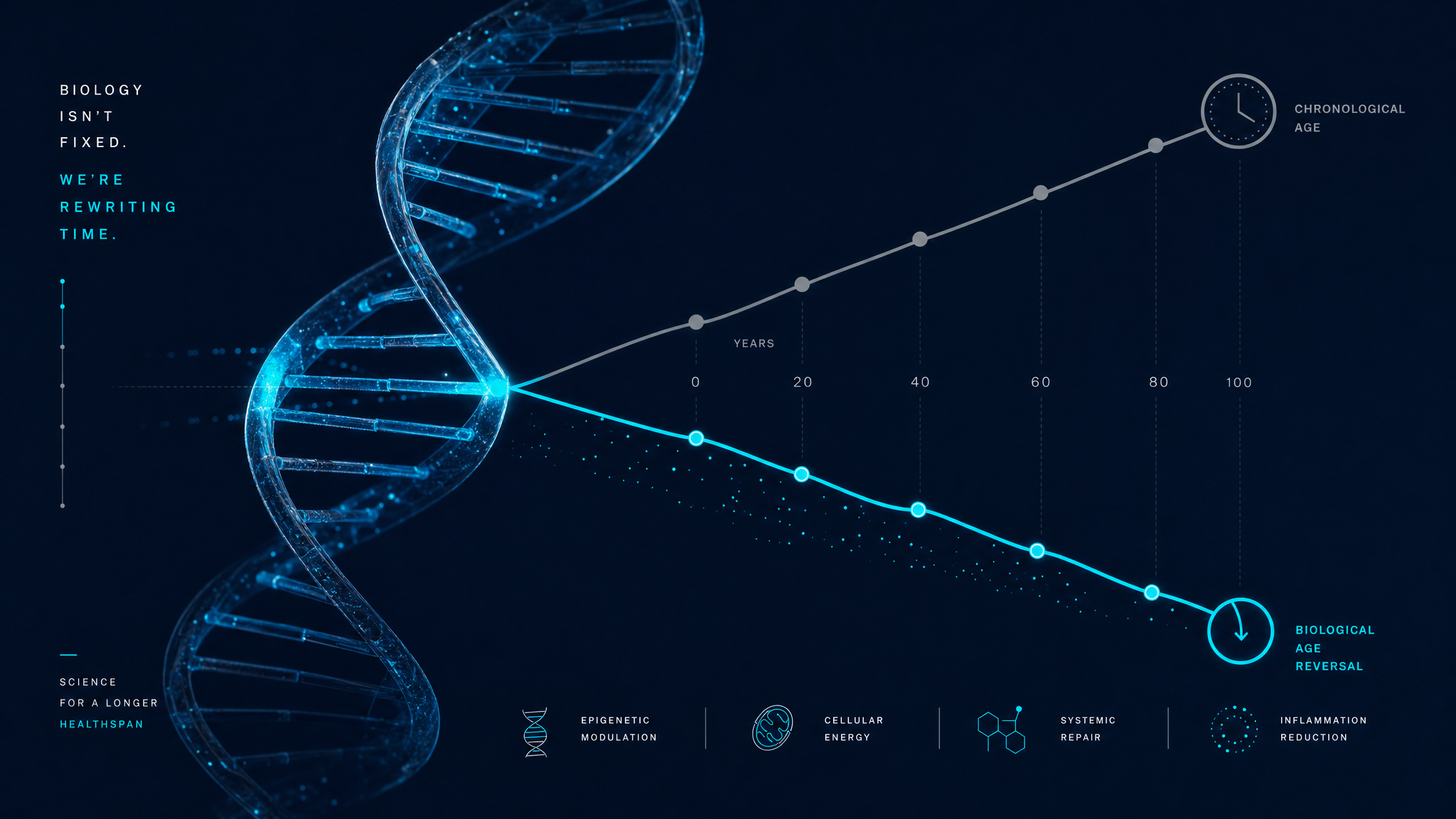
The drugs described above operate on the assumption that aging is a process to be slowed, interrupted, or partially reversed by targeting specific mechanisms. The next frontier assumes something more radical: that aging may be a program that can be reset.
In 2006, Shinya Yamanaka discovered that mature cells could be reprogrammed back to a pluripotent stem cell state by introducing four transcription factors (now called Yamanaka factors). The finding earned him the 2012 Nobel Prize and launched a new field. More recently, researchers have been experimenting with partial reprogramming — using Yamanaka factors briefly, not long enough to fully de-differentiate cells, but long enough to erase some epigenetic markers of aging without erasing cell identity.
In animal experiments, partial reprogramming has reversed aging markers in multiple tissue types, restored vision in aged mice, and extended lifespan in progeroid mice. The hypothesis: cellular aging is largely an epigenetic program — a pattern of gene expression changes accumulated over time — and that program can, in principle, be partially reset.
Altos Labs, a biotechnology company that raised more than $3 billion from investors including Jeff Bezos, is pursuing cellular reprogramming as its primary research focus. The company has recruited leading researchers across multiple disciplines and is building infrastructure to study the basic science of reprogramming in depth before moving toward clinical applications. This is early-stage science by any measure — there are no human trials, no approved products, and significant unknowns about safety (including the risk that incomplete reprogramming could trigger uncontrolled cell growth).
But the direction is noteworthy. A decade ago, the serious longevity science conversation was about drugs that might slow aging by 5–15% at the margins. The current conversation includes researchers — serious researchers at serious institutions — asking whether the aging process itself can be reversed at the cellular level. The evidence base for this more radical claim is earlier-stage. The mechanisms are plausible. The research is real.
“For the first time in history, the FDA has approved a clinical trial targeting aging itself — not Alzheimer’s, not heart disease, not cancer. Aging. The regulatory category has changed.”
Arc Close
The pessimist position — that anti-aging science is quackery dressed in scientific language, that aging cannot be meaningfully slowed, that the drugs don’t work — was a reasonable position in 2000. It requires more and more work to maintain in 2026.
The data tells a different story. Rapamycin has extended lifespan in mice across three independent labs, replicated multiple times, in both sexes, with a known mechanism. Senolytics have produced functional improvements in human patients in controlled clinical trials. The FDA has approved a trial targeting aging as a disease — a categorical shift in how the regulatory system classifies what medicine is allowed to treat. Cellular reprogramming has reversed aging markers in animal models, and billions of dollars are now organized around understanding whether it can work safely in humans.
None of this means the problem is solved. The gap between promising animal data and proven human benefit is large, and longevity research has produced enough false dawns to justify healthy skepticism about any specific claim. Human lifespan is long; running the definitive trials takes decades. Side effects at longevity-focused doses are incompletely characterized.
What has changed is the underlying biology. For most of human history, aging was understood as an inexorable process — the running down of a clock, the accumulation of damage, the inevitable consequence of living. What research has demonstrated over the past two decades is that the clock has identifiable mechanisms, that some of those mechanisms respond to specific interventions, and that the boundary between “diseases aging causes” and “aging itself” is not fixed.
The arc of medicine has always moved in this direction: from treating symptoms to treating causes, from managing disease to preventing it, from working around biology to working with it at ever more fundamental levels. The longevity drugs are not the endpoint of that arc. They are an early point on a curve that is just becoming visible.
As covered in Article 01 of this series, the ability to measure biological age with precision is already here. The drugs to act on what those measurements reveal are arriving. What comes after — reprogramming, not just slowing — is the question being answered now.
The arc of human lifespan has been bending upward for two hundred years. The rate of bend is increasing. And for the first time, the mechanisms responsible for that bend are becoming objects of direct scientific intervention.